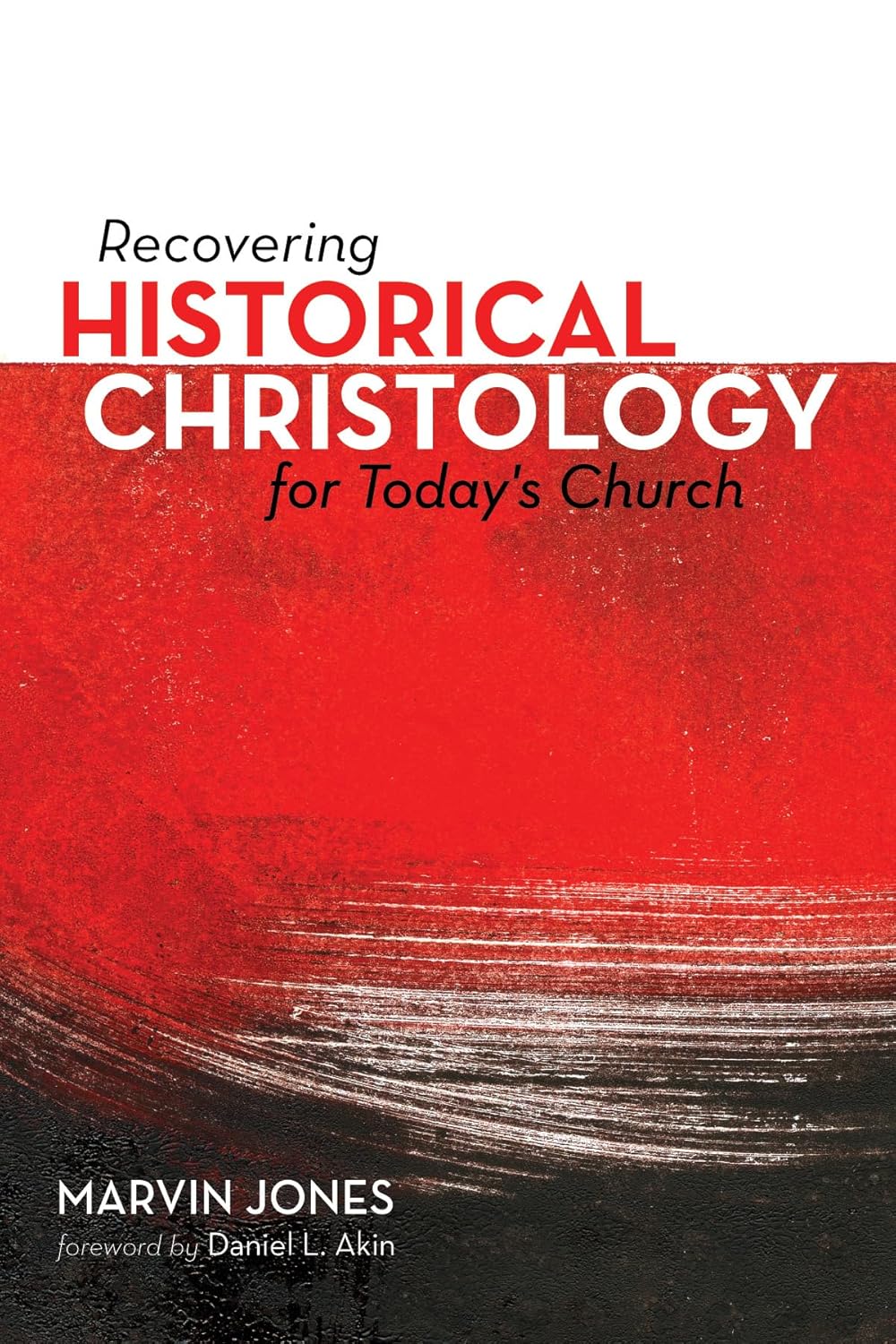
A Brief Book Summary from Books At a Glance
A textbook for an introductory class in Christology.
Table of Contents
Section I: Primary Christological Passages
1 The Christology of Colossians and Hebrews (Marvin Jones & Justin Langford)
This chapter reviews the basic description of Jesus Christ as God with the focus upon the meaning of the Incarnation.
2 The Christology of Philippians and John (Marvin Jones & Justin Langford)
This chapter depicts the incarnation from the vantage point of 1) the ethical considerations of the incarnation, 2) the eternal nature of the Son as incarnate.
Section II: Historical Christological Councils
3 The deity of Christ in Christian thought before Nicæa (Michael Haykin)
This chapter reviews Christological thought from Pagans, who inadvertently, stood as witnesses to the deity of Christ. The chapter concludes with reviews of Ignatius of Antioch and the “Letter of Diognetius.”
4 The Road to Orthodoxy leads to Nicaea (Marvin Jones)
Nicea was the first ecumenical council to wrestle with the heresy of Arianism. This chapter will review the context of the challenge and examine the conclusions of the Nicene Council.
5 The Council of Constantinople (381) (Stephen Presley)
The Council at Constantinople continued to deal with heretical issues concerning the Christology and the Trinity. This chapter will examine the historical christological issues and summarize the solution to the heresy.
6 The Council of Ephesus (Peter Beck)
Ephesus examined the theological issues that arose from the teachings of Nestorius. This chapter will review the context and content of the Nestorian challenge and then examine its proposed solution.
7 Christology and The Chalcedon Council (Marvin Jones and Justin Carter)
This Council of Chalcedon examined and settled the orthodox issues concerning the relationship of the two natures of Christ and the relationship between Christ and the Trinity. This chapter will review the details and the proposed solution of Chalcedon.
Section III: Contemporary Christological Applications
8 The Person and Work of Jesus (Adam Harwood)
This chapter will synthesize the conclusions of the council with the biblical evidence. It will present a unified approach to Christology that honors the conclusions of the councils along with the teachings of the Scriptures.
9 Christological Preaching in the Contemporary Church (Philip Caples)
This chapter will discuss the process of preaching (and teaching) Christology to the contemporary church. The preacher, pastor, education and youth director will be able to design sermons (and lessons) that influence discipleship based upon Christological content.
10 Christology for the Twenty-First Century (Marvin Jones)
Addendum 1. Sermon Brief: Col. 1:15–20
Addendum 2. Propositional Outline of Col. 1:15–20
Bibliography
Selected Quotes
- The New Testament reveals the person and work of Jesus Christ. He is the central person that not only unifies the Old with the New Testament but also dominates the revelation of the New Testament. The person of Jesus Christ is the focal point and central theme of the Christian faith. (3)
- The question that arises from the mission of the New Testament church has become the same question for the modern church: Who is Jesus Christ whom the Father sent? How is he both God and man? How does the church respond to this claim that he is unique as man and also God? (5)
- In fact, this theme—Christ’s humility as a servant—was the unifying factor within the [Philippian] church. (26-27)
- The incarnation is the focal point of John’s Christology. Jesus Christ is the divinely appointed mediator to creation while also expressing the Father to creation. The fellowship of humanity with God is possible only in Jesus Christ. (42)
- The Council of Chalcedon is a defining moment in Christianity. The deliberations of the Council produced the theological creedal milestone that both modern Protestants and Catholics adhere. The famous Chalcedonian Creed established christological orthodoxy that has stood the test of time. (121)
- Jesus is the Christ, who died for sinners (1 Cor 15:3), which is the good news that Paul identifies as the center of his ministry. God is reconciling the world in Christ. (153)
- Christ-centered sermons along with a loving pastoral spirit in a minister will enhance the power of the gospel in a church family. (171)
- The presence of the triune God in the contemporary church is a compelling reason to proclaim Jesus Christ to a hurting world with those answers. This gospel proclamation, with a proper biblical Christology, will evangelistically transform culture as it is designed to do. (184)