A Book Review from Books At a Glance
by Michael D. Mock
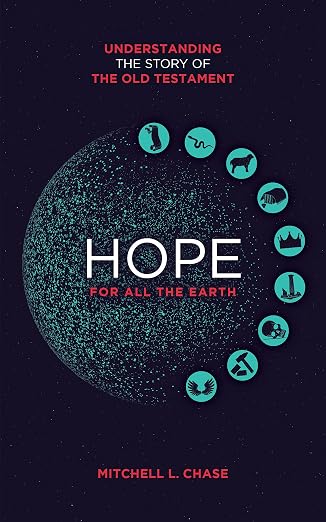
Mitchell Chase, professor and author, has blessed the Church with a short and clear summary of the Old Testament and the hope embedded in it and prophesied throughout it. The Old Testament is a large book, and it is easy for its readers to get lost in the details or to fail to see the big picture. Moreover, many (wrongly) view the Old Testament to be empty of hope: 39 books of bleakness and darkness. Chase disabuses the reader of this wrong-headed thinking and fills the mind with the hope of Scripture. Chase’s book does a number of things well, but I want to highlight three features that commend this book to all readers.
Biblical-Theological
The discipline of biblical-theology unfolds chronologically the development of God’s gracious dealings with sinful humanity. In eight short chapters, Chase skillfully sets the Old Testament scene. He doesn’t get bogged down on the details, but he draws out for the reader the foundational and main narratives, persons, and symbols in the Old Testament that display God’s patient, progressive revelation of the grace of salvation. After starting from creation, Chase puts before the reader Adam and Eve, then Abraham and the other patriarchs, Israel with Moses, the major kings of Israel, the divided kingdom, the destruction of the northern kingdom, the destruction and exile of the southern kingdom, the return of the people of God, the rebuilding of the Temple, and the long-expected anticipation of true and lasting renewal of land and people. He explains effortlessly the hope-filled story of redemption, even while acknowledging the hard-heartedness and heart-breaking actions of God’s chosen nation. For anyone who needs a crash course or a summative reminder of the contours and chronology of the Old Testament, this book fits the bill. If you’re studying for an English Bible exam, or you just need the big picture, pick up this book and read it. It needn’t take more than 2-3 hours of reading. Or linger over each chapter to take in and reflect on God’s story. Chase’s beginning timeline is an attractive screenshot of salvation. For this feature alone I will recommend this book to my church members and my own children.
Christ-Centered
There is no proper biblical-theology apart from Christ. Chase knows this, and throughout this short book he reminds us of the deep connection between the Old Testament and its author, the Son of God. In fact, this is how he begins his introduction. He tells us, “The Old Testament exists to prepare the way for the Lord Jesus Christ…These thirty-nine Old Testament books are the Bible Jesus read” (1). That’s reason enough to read the Old Testament! The first half of God’s Bible is full of hope because Hope is the Person, Jesus Christ. He is the one who wrote the Old Testament. He has told us that the Old Testament speaks of him, so we should look for him throughout it. Before moving to each subsequent chapter, Chase ensures the link to our Lord is forged. He connects each narrative, event, or figure to Christ. At the end of each chapter is a section called “Expecting Jesus,” which contains several bullet-points of reference to the Redeemer. For anyone struggling to see the Savior throughout the Old Testament, this section is an excellent view and appetizer to behold the Messiah. A teacher or small group leader could easily craft a handful of lessons influenced by or utilizing this material to show how the Old Testament speaks of Christ. This book should be read by everyone taking an Old Testament survey course.
Points beyond Itself
Chase knows his book is short, and he knows that the biblical-theological, Christ-centered literature out there is vast. To balance brevity and breadth, in each chapter there is a section “Suggested Reading,” which puts the reader back into the Bible to see more and more of the glories and hope of God in salvation. This reading is all in the Bible. At the end of the book, he lists ten recommended resources on both Bible interpretation and application of biblical-theology. He points to reputable authors and scholars, such as L. Michael Morales and G.K. Beale, who have been used by God to open our eyes to behold beautiful things in the Old Testament and its connections with Christ in the New Testament. Honestly, this book, for its size, is an excellent treatment of the Old Testament’s big picture of its big God. You will be glad you read it.
Michael D. Mock