A Book Review from Books At a Glance
by Thomas Haviland-Pabst
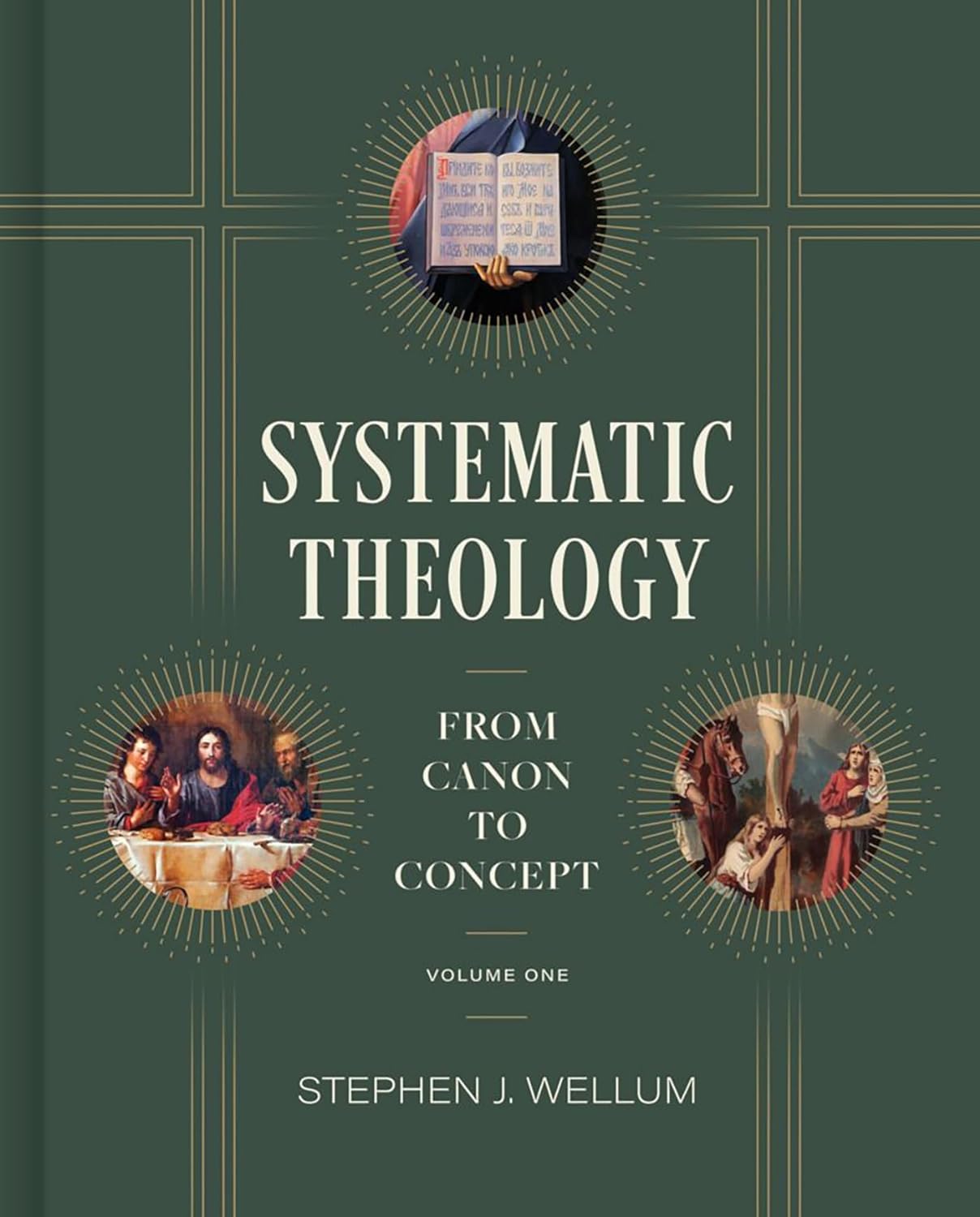
Wellum is professor of Christian theology at Southern Baptist Theological Seminary and author of numerous books, such as God the Son Incarnate: The Doctrine of Christ (Crossway, 2016) and the book he co-authored with Peter J. Gentry entitled Kingdom through Covenant: A Biblical-Theological Understanding of the Covenants (Crossway, 2012). With this volume, we have part one of a two-part systematic theology.
In the introduction, Wellum notes five convictions or starting points that inform his systematic theology: (1) “classic, orthodox theology” rather than novelty; (2) the Reformation solas (e.g., sola Scriptura) (p. xvi); (3) “unashamedly Baptist”; (4) providing an alternative to “classic Reformed covenant and dispensational theology,” namely, ‘progressive covenantalism’; and (5) “systematic theology arises from the entire canon of Scripture” (p. xvii). Of the main loci of systematic theology, this volume focuses on prolegomena, the doctrine of Scripture, the overarching narrative of Scripture (for Wellum, progressive covenantalism), and theology proper (the Trinity, the attributes of God, etc.); these four loci reflect the four parts of this volume, respectively.
Given the length and depth of this volume, rather than providing the reader with a point-by-point summary of each section of the book, I will take this space to highlight some key aspects of this book. As one would expect, given his previously stated convictions, Wellum argues for a high view of Scripture, i.e., a clear and unequivocal affirmation of the “verbal-plenary” (p. 222) inerrancy and infallibility of Scripture. In our current theological landscape, this understanding of Scripture is not one to be taken for granted. Beyond this, he provides a clear discussion and criticism of “neo-orthodoxy” (p. 153), i.e., specifically, Karl Barth and those working after him, such as post-liberal (e.g., George Lindbeck), post-conservative (e.g., Stanley Grenz) schools, as well as biblical scholars such as Peter Enns and Kenton Sparks. In a powerful and accurate statement, Wellum writes, “The triune God may serve as the foundation for theology (which neo-orthodoxy confesses), but without a reliable and true word from him, we have no objective, true, warranted speech from him” (p. 250) and, as such, if we adopt these approached to Scripture, we are left with the question of whether God has even communicated to us.
Also, a tendency among those following after Barth is a tendency to categorically reject natural theology. Wellum carefully distinguishes natural theology from natural revelation. While the former, he argues, is an exercise in futility as it seeks to come to a knowledge of God based on human rationality alone, the latter is God’s revelation of himself in creation and in the human conscience. By recognizing this category, against Barth, Wellum rightly sees it as rendering each person without excuse and, also, as providing a bridge for the gospel. Regarding the latter, he states:
Every person you meet is surrounded by God’s revelation of himself outside and inside them. Even if the truth is suppressed, it cannot be eradicated; our point of contact with them is as broad and deep as creation itself. Humans, in other words, cannot live in this world apart from constantly butting up against reality—a reality that reveals God (p. 216, emphasis original).
Helpfully, he thoroughly discusses the canon of Scripture. Drawing from the work of Beckwith and Kruger (among others), he surveys the canonization of the OT and NT, respectively. Rightly, after noting the three requirements for including a writing in the canon (apostolicity, orthodoxy, catholicity), he notes that the church did not establish but rather “came to recognize” the books of the NT as well as the OT writings as “God’s word” (p. 388, emphasis original).
Although he has written far more extensively elsewhere on progressive covenantalism, he helpfully includes his discussion of it in this work. This is especially important since it gives biblical-theological texture to how he understands the movement from creation to new creation. Readers will be interested to know whether he includes a discussion of other biblical-theological understandings of Scripture, such as dispensationalism and covenant theology, in the explication of his own view. Thankfully, he does not disappoint. In the fifteenth chapter, he discusses dispensationalism with its varieties, on the one hand, and covenant theology with its varieties, on the other. Some points of disagreement with dispensationalism include an affirmation of “a creation covenant” in Genesis 1-3, whereas dispensationalists see Gen 12 as the beginning of “the Bible’s plotline” (p. 524).
Intriguingly, an affirmation of such a covenant by Wellum places him closer to covenant theology than earlier articulations of something like a ‘new covenant theology.’ However, against covenant theology which posits two covenants, one of works and one of grace, he argues that “it is best to think of God’s plan unfolding through a plurality of covenants” (p. 524, emphasis original). Thus, rather than a catch-all category such as a ‘covenant of grace’ to describe the entirety of God’s covenantal work after the fall, Wellum seeks to account “for the integrity of each covenant” (p. 524). Proponents of covenant theology reading this volume will find a sophisticated conversation partner in Wellum, especially since he truly does draw from the strengths of both dispensationalism and covenant theology, providing something of a via media (though, to date, I believe Wellum resists such a construal of progressive covenantalism).
Turning to the doctrine of God and the Trinity, Wellum takes a classical theist position. That is to say, he unhesitatingly endorses the classic understanding of God as impassible, immutable, simple, omnipotent, etc. Also, he affirms and argues for the classical view of the Trinity over against social trinitarianisms. Thus, for Wellum, God is not three individual persons making up a divine family but rather God is mysteriously three persons sharing one essence and as such, he refutes the eternal subordination of the Son to the Father and affirms that “God’s external works are inseparable, that is, indivisible and undivided” (p. 699). In addition, he affirms a classical Calvinist understanding of God’s providence, though, following Frame, Bavinck, and others, remaining agnostic regarding the order of God’s decrees, seeing both infra- and supralapsarianism as contributing “to our thinking about God’s decree” (p. 782).
There is much to commend this work. First, Wellum writes clearly, thoughtfully, and authoritatively, and, yes, while one would expect as much, the conviction with which he writes, all the while taking into account the various and competing positions, is something that is needed in systematic-theological writing. Second, he is a sure theological guide as he doesn’t seek to write something new or novel, but he seeks to draw from the wisdom and insight of the church, challenging long cherished positions (e.g., covenant theology) only when necessary and always with a charitable disposition. To be charitable while disagreeing is something Wellum models in spades! Third, Wellum’s is the first systematic theology written from an explicitly progressive covenantal perspective. I am excited to see how he fleshes that out in the second volume, especially when he discusses ecclesiology in more detail. There are many systematic theologies out there, and it doesn’t seem like the writing of such is showing signs of slowing down but given the reasons discussed above, I would highly recommend including Wellum’s Systematic Theology for your library.
Thomas Haviland-Pabst