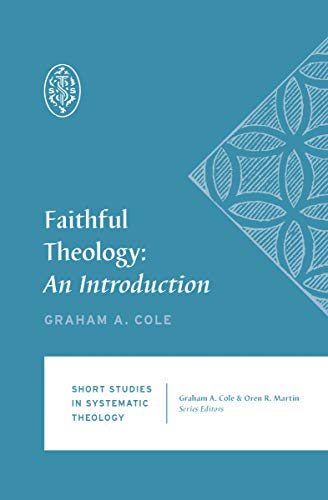
A Brief Book Summary from Books At a Glance
by Steve West
Table of Contents
Introduction
1 The Word of Revelation
2 The Witness of Christian Thought and Practice: Past and Present
3 The World of Human Brokenness
4 The Work of Wisdom
5 The Way of Worship: Putting It All Together in Thought and Life
Conclusion
Summary
Introduction
In one sense every Christian is a theologian, since every Christian holds certain theological beliefs. Theology is “talking about God” (theos logos), and when that discourse is organized, it constitutes a body of doctrine. Some Christians are highly trained in systematic thinking about God, but since every Christian thinks and talks about God, every Christian is a theologian at some level. It is imperative that we all grow in our ability to accurately think and talk about God. In order to do this, we need to use a proper method for doing faithful theology—faithful theology is faithful to God and his word. “Faithful theology is a human project that arises from wise reflection on the self-revelation of God. Because it is our reflection on God’s revelation, it is always open to be reformed and corrected by that revelation.” Proper theological reflection addresses three normative questions: 1. What is true, what ought to be believed? 2. What should we value, what should our hearts love? 3. How should we live, what is practically and existentially right?
Chapter 1: The Word of Revelation
A.W. Tozer said that, “What comes into our minds when we think about God is the most important thing about us.” If this is the case, it raises the vital issue of where we can find the truth about God. Our ideas about God need to be drawn from God’s self-revelation in Scripture; every doctrine must be grounded in biblical texts. All Scripture is theopneustos (God-breathed), so it is inerrant and infallible. There is a human dimension to the writing of Scripture—the authors have different styles, vocabulary, emphases, etc.—but the primary author of Scripture is God. There is a dual authorship for every word of Scripture, such that every word is precisely what God wanted written, and every word is identified as his own. A key divide between evangelicals and liberals is over the doctrine of Scripture and whether or not it is inerrant. Evangelicals maintain that Scripture is the definitive and authoritative source for knowing about God, his words, and his actions, that it is verbally inspired and inerrant, and that it is the norming norm by which theological proposals are tested. The Lord Jesus Christ held to the highest view of Scripture, and if we are his followers, we need to accept his view of God’s holy word. Jesus often corrected the Pharisees by pointing out that they had misinterpreted Scripture. All of our beliefs and practices must be brought into conformity with the written Word of God.
Those with a high view of Scripture still need proper hermeneutics to interpret the Bible correctly. The Reformers rightly believed that Scripture interprets Scripture, that biblical passages do not contradict one another, and that clear texts should interpret passages that are less clear. Since the Holy Spirit is the primary author of Scripture, there is unity and consistency in all of Scripture. There are certain passages in Scripture that are difficult to interpret, but the main doctrinal teachings are abundantly clear. We need to be careful in identifying genre and make sure that we are reading texts in context. When Jesus was being tempted by Satan in the wilderness, they both quoted Scripture, but Jesus interpreted it correctly in its proper context.
We have to recognize that we may say we have a high view of Scripture, yet in practice, our beliefs and ethics are not really drawn from it or based on its authority. Calvin used the illustration that the Bible is like a pair of glasses that we need to wear in order to correct our vision and see clearly. Without Scripture, we would not truly know God or ourselves. Some have accused evangelicals of holding to the doctrine of the Trinity even though there is no text that teaches the doctrine. The Scriptures, however, do teach all of the component parts of the doctrine of the Trinity, so it is not illegitimate to bring these parts together as a unified biblical doctrine. Scripture is our final authority, but we read Scripture in light of church history and our own personal community context. . . .
[To continue reading this summary, please see below....]The remainder of this article is premium content. Become a member to continue reading.
Already have an account? Sign In