A Brief Book Summary from Books At a Glance
by Steve West
Editor’s Note: Please pardon our biased interest in this book, but we are pleased to announce that it is now back in print. This new edition features an introduction by Stephen Wellum and is available here from Seahill Press.
Table of Contents
Foreword: Douglas J. Moo
Introduction: Stephen Wellum
Preface: Approaching a New Covenant Theology
1 The Christian Appeal of a New Covenant Theology – Tom Wells
2 A Brief History of Divine Revelation – Fred Zaspel
3 The Description of the New Covenant (Part One) – Tom Wells
4 The Description of the New Covenant (Part Two) – Tom Wells
5 Matthew 5:17-20 – A History of Its Interpretation – Fred Zaspel
6 Matthew 5:17-20 – Contextual Observations – Fred Zaspel
7 Matthew 5:17-20 – The Messianic Mission – Fred Zaspel
8 The Law of Christ in Matthew 5:18-20 and Related Passages – Fred Zaspel
9 The Continuing Relevance of Divine Law – Fred Zaspel
10 The Meaning and Source of Moral Law – Tom Wells
11 Critiquing a Friendly Attack (Part One) – Tom Wells
12 Critiquing a Friendly Attack (Part Two) – Tom Wells
13 The Sabbath: A Test Case – Fred Zaspel
14 The Sabbath: Some Critical Texts in Paul – Tom Wells
15 Our Creeds and How They Affect Our Understanding – Tom Wells
Appendices
Summary
Chapter 1: The Christian Appeal of a New Covenant Theology
The NT is the final revelation of God, not just in terms of chronological sequence, but in terms of being the climax and culmination point of God’s progressive, developing revelation. As the apex of God’s revelation, the NT has a logical priority over earlier texts. For example, the OT clearly commands Israel to engage in warfare, but it is logically possible that Jesus could have commanded his followers to never do so. If he had, his instructions in the NT would be our logical starting place and would be authoritative over us as Christians today; Jesus’s commands would supersede the older commands to Israel. It is essential that we give the NT logical priority when we look at issues like covenant, baptism, and Sabbath, because if we don’t, our theological systems will be in error. Being slaves to Christ means that we recognize that he is our Lord, and we must be obedient to whatever he commands.
On the Mount of Transfiguration, the Father commanded Jesus’s followers to listen to Christ, even over Moses and Elijah (i.e., the prophets). Jesus Christ is the highest revelation of the glory and moral character of God. His person, teaching, and redemptive work reveal more of God than the revelation of the OT. We must look to Jesus for the clearest and highest revelation of the Father. Biblical theology prioritizes the text in context over atemporal systems of doctrinal formulation, and this is a necessary discipline for properly understanding Scripture. The witness of church history is that there are two major covenants in Scripture, the old and the new, rather than one covenant that runs through the entire canon. New Covenant Theology, therefore, stands in the broad stream of church history, unlike Covenant Theology which is, relatively speaking, a historical innovation. It is a serious mistake to blend law and gospel as ahistorical ideas; the gospel is the fulfillment of God’s promises, and the law covenant does not have covenantal or legislative authority in the era of the new covenant gospel and fulfillment in Christ. . . .
[To continue reading this summary, please see below....]The remainder of this article is premium content. Become a member to continue reading.
Already have an account? Sign In
Buy the books
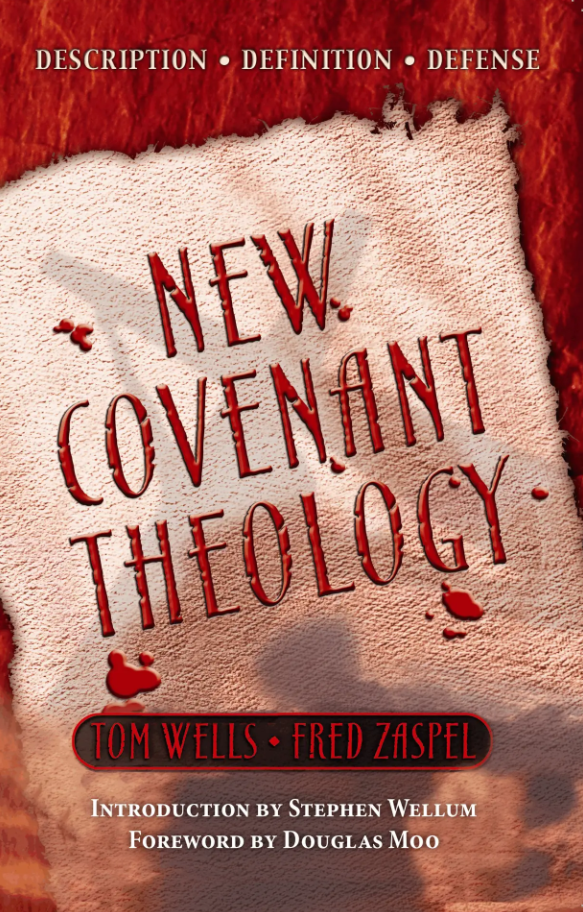
NEW COVENANT THEOLOGY: DESCRIPTION, DEFINITION, DEFENSE, by Tom Wells and Fred Zaspel