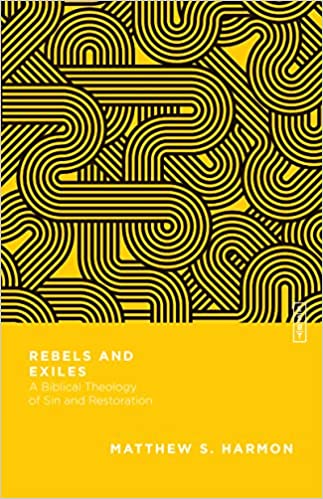
A Brief Book Summary from Books At a Glance
by Steve West
Table of Contents
Introduction: Sin and Exile in Contemporary Experience
1 Humanity’s Original Rebellion and Exile
2 The Threat of Exile If/When Israel Rebels
3 The Reality of Exile When Israel Rebelled
4 Return from Exile When Israel Repents
5 The End of Exile Inaugurated through Jesus’ Life and Ministry
6 Restoration through Jesus’ Death, Resurrection, and Ascension
7 Life as Exiles in a Fallen World
8 The End of Exile Consummated in a New Creation
9 The Practical Implications of Sin, Exile, and Restoration
Summary
Introduction: Sin and Exile in Contemporary Existence
Home can refer to the place where we feel most comfortable and where we feel like we truly belong. There are many people who are involuntarily living away from where they want to be, and this is a form of exile. Exile can be physical, geographic, spiritual, and cultural. In this broad sense, a feeling of exile is common to the human experience—people long for something more than this world can provide. Many people experience a longing for another realm or world; they want to return to Eden. We long for another world and recognize that this world is broken. We need to pray that God will help us to see why our current world is so badly broken, why we long for something better, and what the only solution is for our predicament.
Chapter 1: Humanity’s Original Rebellion and Exile
Genesis 1:1 introduces us immediately to God, the main character of the Bible. The verses that follow in Gen. 1 teach that God created everything in the universe, and that he made human beings in his image and likeness. Human beings are to be fruitful and multiply, reigning wisely over the created order in submission to the ultimate authority of God. Adam and Eve were given a priestly and kingly role in Eden which was a garden sanctuary. Rather than acting as a king and a priest, Adam allowed the serpent to be in God’s sanctuary and lead them away from God. Adam rebelled against God, putting himself in the supreme position of authority. His act of rebellion was an act of idolatry. Sin now affects every aspect of humanity and every relationship.
As a result of their rebellion, God banished Adam and Eve from the Garden—they went into exile. Rebellion and sin results in exile and removal from God’s presence. In the midst of judgment, God still acted with grace, promising that the serpent would be defeated, and clothing them with the skins of sacrificed animals. Adam named his wife Eve in hope that she would bear children. This pattern of sin and exile recurs throughout Genesis but on smaller scales. For example, Cain experiences banishment, and at Babel the peoples are scattered. Jacob and Joseph both experience exile. With the calling of Abram we see that God is going to restore people from exile, restoring the balance of people, place, and his divine presence. It was through Abram’s line that God was going to bring the seed who destroys the serpent. The promise for gathering in and blessing the nations would extend to the whole world through Abram’s offspring. The great promise to end exile was that God would be their God and they would dwell in his presence. Our hope for restoration and the end of exile is found only in the fulfillment of God’s promises. . . .
[To continue reading this summary, please see below....]The remainder of this article is premium content. Become a member to continue reading.
Already have an account? Sign In