A Brief Book Notice from Books At a Glance
by Fred G. Zaspel
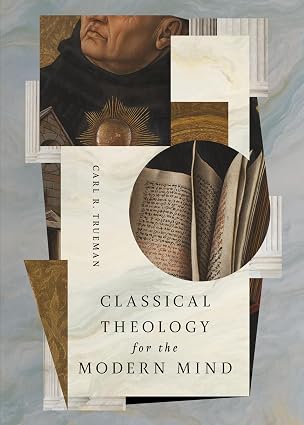
In Classical Theology for the Modern Mind, historical scholar Carl Trueman examines how remembering history, reciting creeds, and studying ecclesiology counter cultural pathologies that inhibit our modern minds.
Table of Contents
Introduction: Pathologies of the Modern (Christian) Mind
1 Reformation Protestantism and Early Church Theology
2 The Confessional Significance of Nicene Christianity
3 Ecumenical Implications
4 Classical Theology and Pastoral Application
5 Classical Theology and Worship
Conclusion
Selected Quotes
- The revival of classical theology in our day is something that orthodox Protestants should welcome. (1)
- Connected to this thinking, one very poor reason for rejecting classical theology might be that it is not therapeutic in today’s sense: Because it asserts the doctrine of God as prior to all things, it does not pander to the modern need to be made to feel good about ourselves. (9)
- However, the tastes and tendencies of modernity have influenced contemporary evangelical life and thought, classical theology is nonetheless consistent with the historic Reformation Protestantism that stands in the background to our modern Protestant churches and, in the case of confessional churches, to the confessions they look to as their defining documents. (13)
- Evangelical theology’s tendency in some of its expressions toward a bare biblicism and away from serious engagement with the intellectual history of the church has left it vulnerable to unwittingly holding positions that are basically incompatible with both the Nicene faith and its later appropriation and reiteration by the Reformers and their immediate successors. And the reason why the Nicene faith is important and why the Reformers appropriated it is not simply that it is old but also that it captures the biblical teaching on God. (22)
- What makes the project of retrieving classical theology more than a mere antiquarian or academic exercise is the significance it has for the church. And this significance lies in the role that the confessional documents of the sixteenth and seventeenth centuries fulfill in the church today. (34)
- We noted earlier that the therapeutic ethos of our age is not conducive to the priority that classical theology gives to the doctrine of God, nor to its somewhat abstract and alien terminology. But while we may disparage the therapeutic excesses of our day, it is very clear that the Bible itself addresses many existential and experiential issues—despair, loneliness, anxiety, and many other dark elements that characterize life in a fallen world. (47)
- Therefore, a return to classical theology that is not at the same time a return to theology pursued within the church for the service of the church is not a true return to classical theology at all. (56)
- To recover classical theology is not to recover an approach to an academic discipline; it is to recover the great, rich tradition of what it means to be a worshiping community. (68)