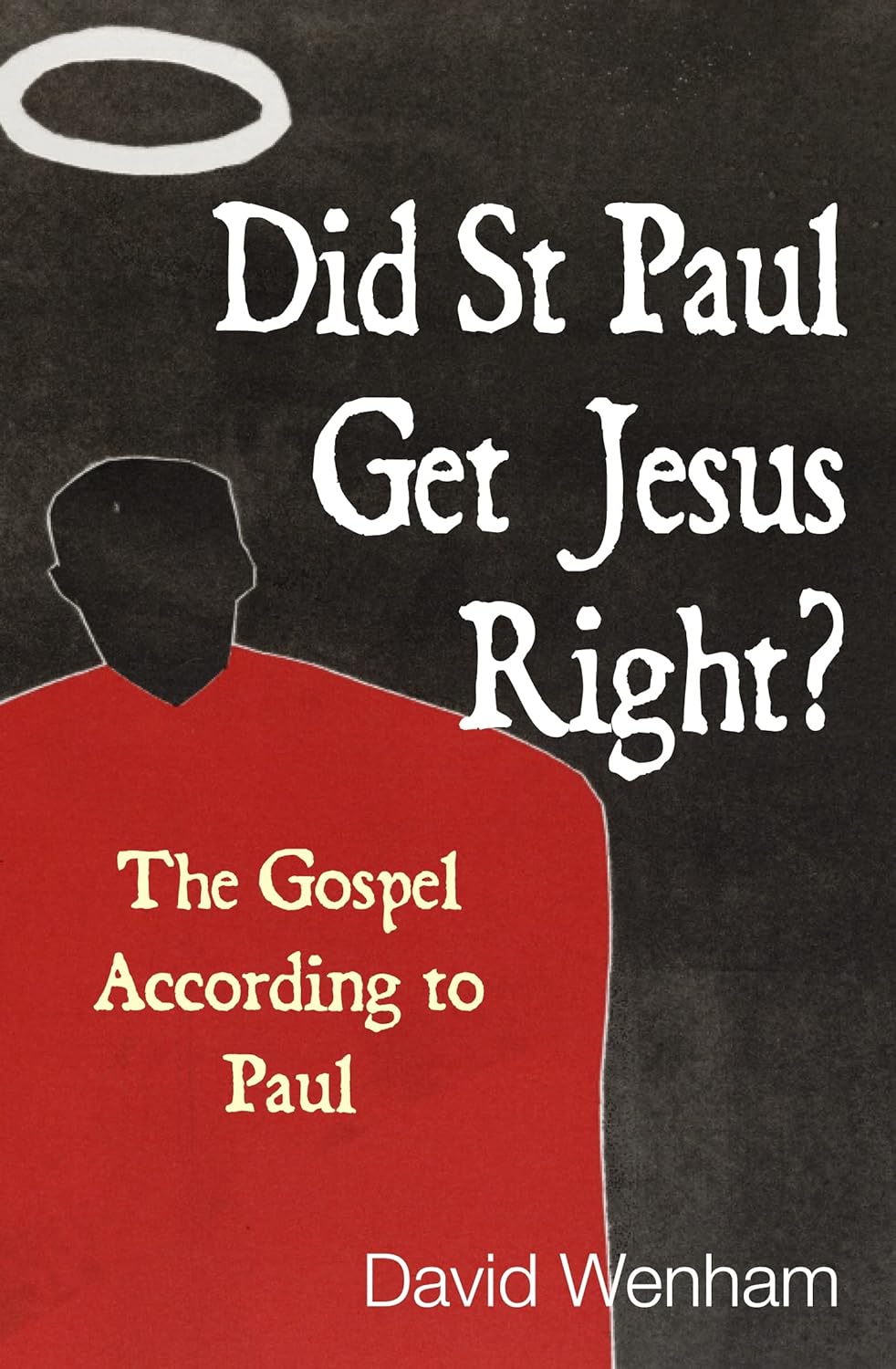
A Brief Book Notice from Books At a Glance
Table of Contents
1 What is the Question and Why is it Important?
2 Can We Use the New Testament as Evidence?
3 How Paul Got Jesus…or How Jesus Got Paul: The Evidence on Paul’s Conversion
4 Was Paul Interested in the Real Jesus? Evidence from Corinth on the Crucifixion and Resurrection
5 Sex, Apostleship, and Love: More Evidence from Corinth and Beyond
6 “Abba”, and What Happens When We Die: Evidence from Galatia and Thessalonica
7 Was Paul the Inventor of Christian Doctrines?
8 Did Paul and Jesus Really Agree?
9 Is Paul Behind the New Testament Gospels?
10 But Paul Was Certainly a Controversialist
11 So Did Paul Get Jesus Right?
Selected Quotes
- “This short book is an attempt, by someone who has been interested in the question for a long time, to show that Paul did not invent Christianity or change the religion of Jesus, but that he got Jesus right.” (14)
- “Paul’s conversion on the road to Damascus is surely the most famous religious conversion of all time. And there is no doubt that it was a hugely formative event in Paul’s life and thinking.” (25)
- “Paul’s silence about the ministry of Jesus paradoxically suggests its importance for him, and tells against the view that he was in the habit of innovatively retelling the story of Jesus. The evidence points to him passing on received traditions about Jesus and regarding them as of foundational importance.” (54)
- “The evidence is that Jesus himself saw his death as a new Passover sacrifice, bringing spiritual liberation…It is part of what Paul received.” (84)
- “There is no good evidence that Paul was the originator of the idea of the divine Jesus.” (92)
- “[Paul] is a profound interpreter of Jesus, not an inventor.” (122)
- “The argument of this book, written by a Christian seeking to be as objective as possible, is that there is very good evidence against the idea that Paul was the inventor or imaginer of the divine Jesus.” (148-149)
- “But there is no evidence whatsoever that the main ingredients of Paul’s gospel—in particular his teaching about Jesus’ life, death, and resurrection—were unique to him or disputed by others.” (152-153)