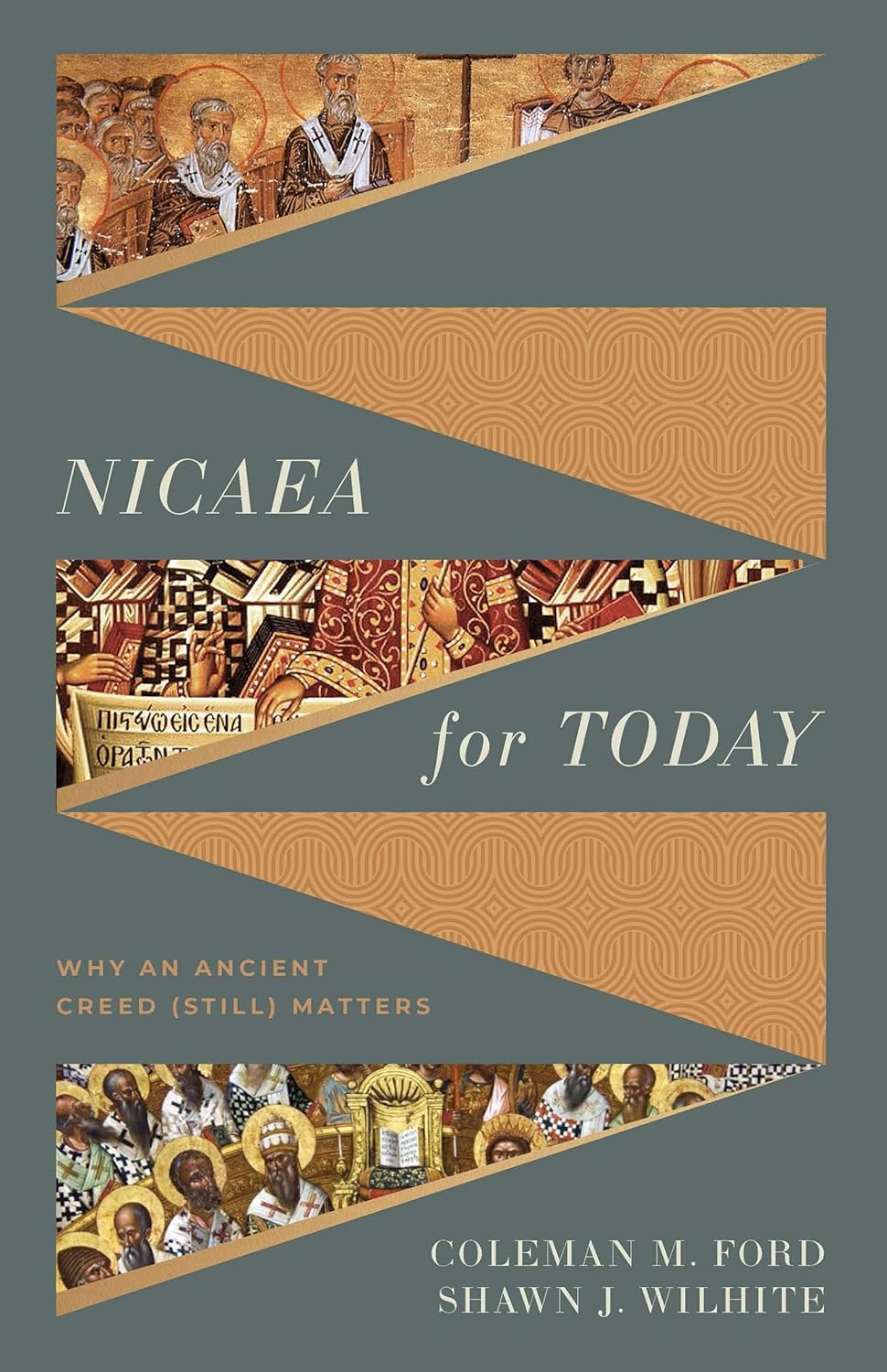
A Brief Book Notice from Books At a Glance
Table of Contents
Introduction: Theologians as Doctors of Sacred Things
1 “There Was a Time When He Was Not”: The Road to Nicaea
2 “By This Sign, Conquer”: Constantine and the Council of Nicaea
3 “Light from Light, True God from True God”: The Eternal Identity of the Son
4 “He Became Human…and Ascended into the Heavens”: Christ’s Humility and Exaltation
5 “For Us Humans and for Our Salvation”: The Beauty of Salvation
6 “The Trophy over Death”: The Beauty of Spiritual Transformation
7 “We Believe”: The Beauty of Nicene Practices
8 No Creed but the Bible? How the Nicene Creed Explains the Bible
Conclusion: The Legacy of Nicaea and Thinking Nicenely for Tomorrow
Selected Quotes
- “The core Christian theology—the doctrine of God the Trinity, and the person and work of the eternal Son made flesh—is represented at the Council of Nicaea in 325.” (4)
- “The Nicene Creed provides essential theological and trinitarian grammar to the Christian church…The first part of the Christological article affirms that the Son is eternally from the Father and possesses the same nature as the Father. Whatever the Father is in terms of nature, so too is the Son.” (51-52)
- “After addressing the eternal identity of the Son, the Nicene Creed reveals why this same Son was made incarnate: for us and for our salvation.” (71)
- “Nicaea’s scriptural, truthful claims display that the incarnation of the eternal Word is for us and our salvation. Salvation is a cosmic and beautiful event, the effects of which being to unfold now and extend into eternity. Christ’s redemption is a mystery of wonder, amazement, and beauty.” (89)
- “The creed contends, and Athanasius affirms, that salvation requires Christ’s full humanity and full divinity. Though the language of this two-nature Christology was not fully articulated until the Council of Chalcedon in 451, we ought to consider this mystery is necessary for our salvation.” (93)
- “If Christ is raised, we have hope. If Christ is victorious over death, we are freed from the fear of death and separation from God. If Christ’s victory is our own, we can walk in freedom from sin.” (120)
- “There is a right and wrong way to read the Bible. The Nicene Creed gives the church a time-tested, biblically faithful, theologically accurate guide for reading, interpreting, and spiritually benefiting from Scripture.” (143)
- “The Nicene Creed is a derivate authority based on the church’s reflection of Scripture; it is scriptural but not Scripture. It is a trustworthy guide and framework for exegesis because its content attests to the infallible source himself: God.” (151)