A Book Review from Books At a Glance
by Michael D. Mock
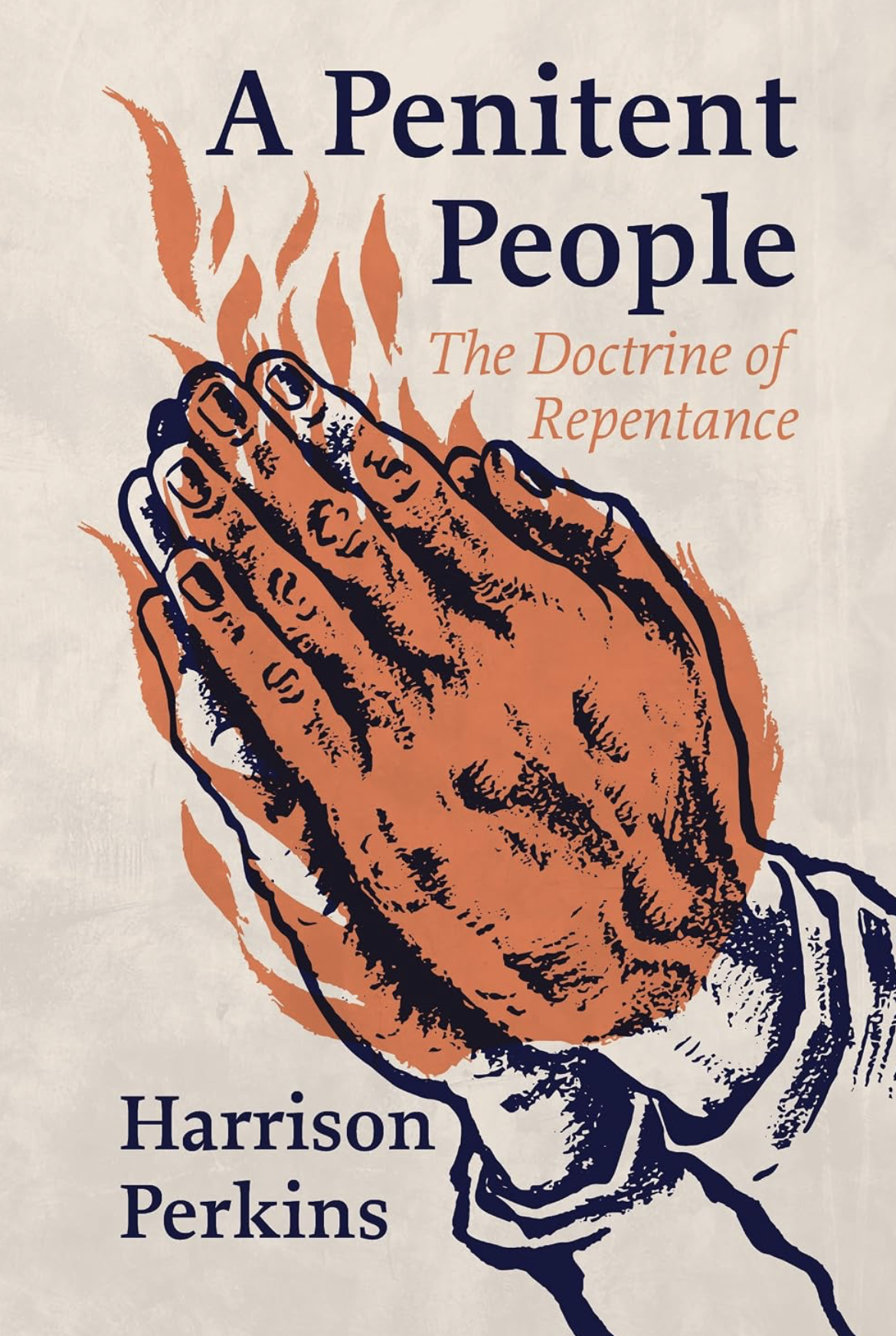
Christians don’t hate their sin enough. Christians don’t love their Savior enough. These unobjectionable truths call for repentance. Repentance is a gift from God by which out of sorrow and hatred we turn away from sin, and out of love for Jesus we turn to him in holy conduct. And it’s this much-needed subject that Perkins handles biblically and practically, all under 130 pages to boot. Repentance, Perkins introduces, “is then the prevailing aspect of our life of sanctification, as we learn to be rid of sin and to know greater freedom in Christ” (10). There are a handful of books on the market for repentance, and Perkins wrote his “out of a pastoral concern to avoid both forms of lopsidedness and to bring joy to our ongoing life of sanctification” (13). He is warning against two ditches on the road of righteousness: (1) to so cherish your justification that you neglect to see the blessing of sanctification through repentance; and (2) to make your justification dependent on your sanctification (8-9). He seeks also to recover the joy of sanctification through repentance, a much-needed recovery given the typical mindset of seeing repentance mainly in negative terms (of what not to do). To argue his thesis, his initial chapter highlights the blessed freedom and fearless freedom Christians graciously and joyfully receive as united to Christ.
Biblical & Theological
Perkins places the doctrine of repentance squarely in Scripture. It’s a blessing from Christ, and God instructs us in the Bible regarding this blessing. Because the Bible is a big book about repentance, Perkins had to be selective. His selection showed biblical breadth. To unpack repentance, Perkins chose five biblical texts, and these represented the robust counsel God provides therein. Perkins helped the reader to behold the blessing of repentance by considering three Old Testament texts and two New Testament texts, but not all from the same literary genre. He picked an epistle (2 Corinthias 7), two psalms (Psalms 38 and 143), an Old Testament narrative (Exodus 24), and a New Testament narrative (Luke 3). I appreciated the literary variety.
One area in need of slight improvement, in my opinion, was his treatment of the locus classicus on the doctrine: 2 Corinthians 7:8-11. The typical pastor, counselor, or wise friend will turn to this section of Scripture to help another to see the various characteristics of real repentance contrasted with a worldly sorrow. Perkins deftly describes repentance from this text. My only qualm is that he didn’t look at all the characteristics in that pericope. I have no disagreement with what was written. It was helpful. However, a textually full-orbed presentation would have strengthened the chapter.
Perkins is a bright theological mind. There’s not a Perkins book I’ve read that I haven’t fully enjoyed and greatly benefited from. This book is no exception. I was surprised (and pleasantly so I hasten to add) to see a robust treatment of John’s baptism in a book like this. No one would have faulted Perkins for omitting the controversial and confusing question of the similarity and/or difference of John’s baptism with Jesus’ baptism. Still, all should appreciate his attention to the biblical text and application of theological truths to explore the substantive difference between what John the Baptist did and what Jesus did (109-112). Grounding his nose to the things above, Perkins skillfully explains the biblical truths of repentance by appealing to selective but representative texts. Refreshingly for the Confessional group, Perkins regularly supports his biblical reasoning through appeals to and uses of the Westminster Standards. He is unafraid to point out what the Confession, Shorter, and Larger Catechism say. His commitment to Scripture and sharp theological reasoning assists in making the right theological distinctions in explaining the doctrine of repentance.
Practical & Illustrative
With the biblical foundation laid, Perkins makes sound application to the saint. The reader doesn’t have to wait until the end of the book to hear how this doctrine should inform his heart and behavior. Every chapter features his pastoral heart. Perkins has both the individual and the congregation in mind as he strives to apply this biblical doctrine. He spends most of his time driving the truth into the person’s heart. Nevertheless, he reserves a chapter for the corporate, congregational, and covenantal context of repentance, connecting Exodus 24 to present-day churches. This was refreshing to witness, especially because many of his readers are likely to be overly individualistic. Truly, repentance is deeply personal. Still, the person is connected to the local church, and his repentance must have positive effects on his church; conversely, his lack of repentance will negatively affect the local expression of the Body of Christ to which he is joined.
Page after page, and to get to the heart that needs transformation, Perkins underscores the joy of daily and deep repentance. He recognizes that “sin’s bleak effects serve to spotlight this book’s fundamental argument,” yet undaunted he affirms “that repentance is a joyful aspect of the Christian life” (5). We should rejoice in our repenting, because it is a blessing tied to our union with Christ, and because it means that we are, by the Spirit of Christ, being drawn ever closer in conformity to our joyful Jesus!
Finally, Perkins is an expert illustrator, even though he will deny this fact. His regular and relevant use of illustration displays his pastoral heart and drives home godly instruction. I was happy to see, for instance, the connection between repentance and a caffeine headache (99). Every chapter has illustrative gems that shine forth the joy of this jewel of repentance. This is a book that every Christian should read. It would serve small groups well. It could assist a Sunday School teacher who needs help in creating a series on the doctrine. For counselees or church members in need of instruction on this teaching, biblical counselors would be wise to assign it or certain chapters. It’s an excellent contribution to the doctrine of repentance.
Michael D. Mock