A Book Review from Books At a Glance
by Michael D. Mock
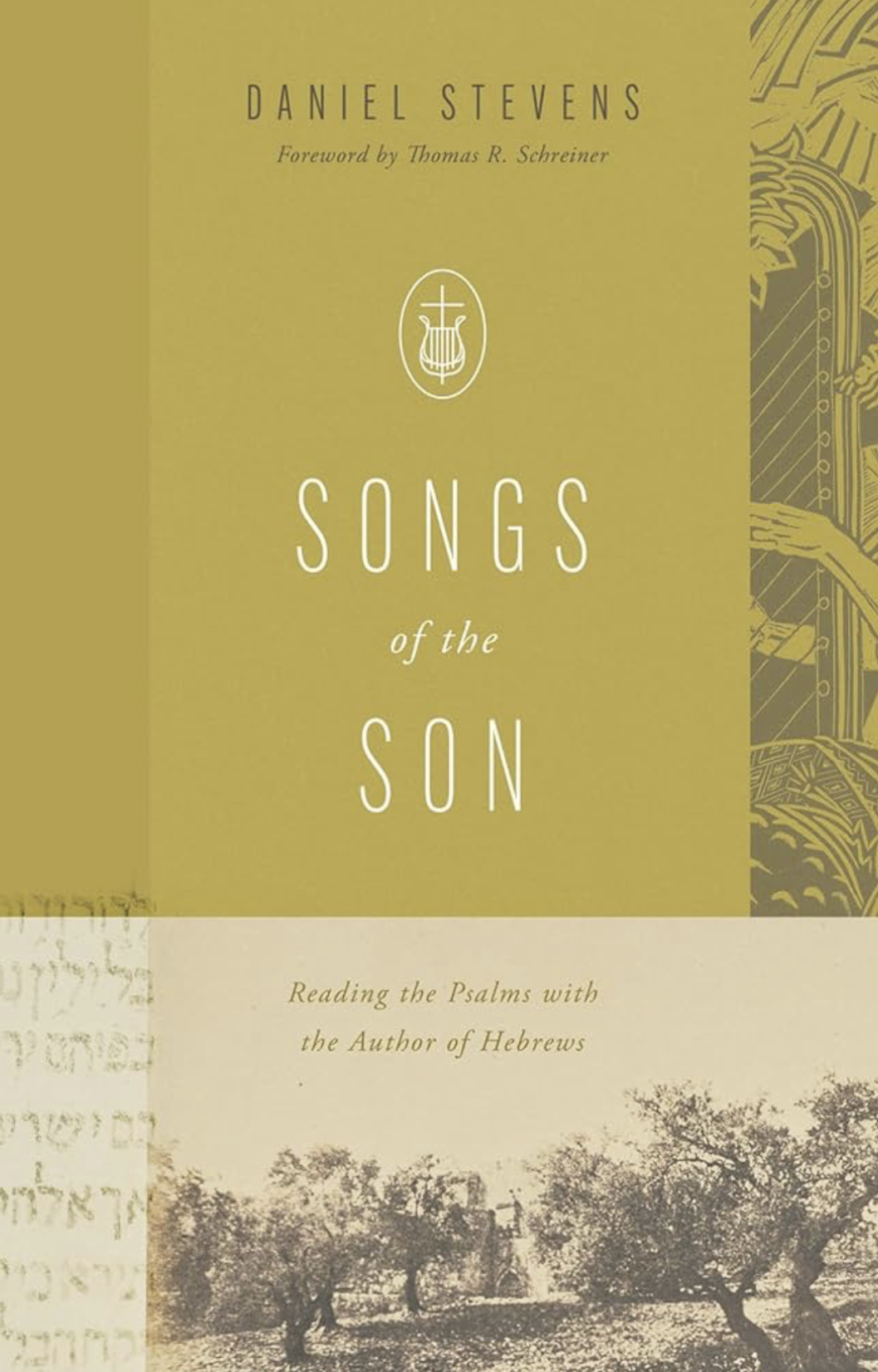
Two beloved books in the Bible meet each other regularly: The Psalms and the Book of Hebrews. Daniel Stevens, as a kind of third-party friend, introduces us readers to the regular meet-and-greet of these ancient literary friends. There are innumerable books written on the Psalms, and almost as countless books on Hebrews. Nevertheless, Stevens’ book adds to the conversational commentary related to the interplay of the two books. When I came across this book, I was deeply interested. At the time of this writing, I recently began my annual preaching series I call “Summer in Psalms.” Some of the Psalms I will be preaching on are covered in Stevens’ book. Furthermore, based on my five-year preaching plan, I am set to begin Hebrews in 2027. The publication of Stevens’ book is timely for my plans, but also opportune for all who desire a deeper dive into these inspired classics. Hebrews quotes ten Psalms (2, 8, 22, 40, 45, 95, 102, 104, 110, and 118), and Stevens considers how Hebrews uses these Psalms.
Stevens’ structure is simple: (1) Read and explain the Psalm in its original context, (2) read the relevant Hebrews text that quotes the Psalm, then (3) re-read the Psalm in light of the New Testament explanation and application of it. His approach is both accessible to the lay person and insightful to the scholar and pastor.
I’ve structured my review around four features that apply to his entire work, which I will demonstrate from a sample of his project. In other words, each of these features applies across the board to the whole book, but for the sake of space, I will draw evidence from only one Psalm each to support the claim. His Songs of the Son is mind-satisfying, soul-comforting, heart-stirring, and Christ-exalting.
Mind-Satisfying
Stevens researched and engaged in the mental toil to produce a truly mind-satisfying work. He took seriously his Savior’s charge to love the Lord with all his mind, as Stevens strove to see where the Psalms speak of his Savior. His work is repeatable throughout each chapter, but this feature was most noticeable in his treatment of Psalm 40. A marginal note in my copy of this book read “hard to connect.” In other words, Psalm 40 likely required more mental exertion and Bible study than what was needful for others. Stevens himself noted, “I explain this because Psalm 40 could constitute a challenge to the type of reading we have been doing so far in this study” (52). Still, because Hebrews quotes at least a portion of Psalm 40, Stevens rolls up his exegetical sleeves and plows through the soil of Scripture. For instance, from Psalm 40, God made it clear to David that “there is some insufficiency in the sacrifices, the very sacrifices that God instituted” (57). This note leads Stevens to explore how Hebrews employs Psalm 40, and we observe that the author to the Hebrews opens the way to the superiority of the Son’s sacrifice over against all the Levitical offerings, which were types and shadows: important for a time, but to last only for a time. With the connection made, and the similarities and differences between the two Testaments noted, Stevens connects Psalm 40 with Hebrews in a way that calls us never to be ashamed of apparently difficult texts of Scripture. We may not have all the answers, but often the answers lie underground and await some plowing. For all the Psalms under consideration, but especially in the case of Psalm 40, the readers are initially left wondering how to make sense of what’s going on, but Stevens paves the way for true understanding. He also concludes each chapter with discussion questions, some of which address the level of understanding.
Soul-Comforting
From Psalm 22, Stevens shows how soul-comforting the Psalms are. Delightfully, Stevens shows how Psalm 22, which has posed quite a problem for readers, simultaneously satisfies the mind and comforts the soul. Psalm 22 is one of the more obvious and beloved passages in the Psalter. Jesus takes up this Psalm while hanging on the cross and dying for our sins, “My God, My God, why have you forsaken me?” What I found especially helpful were his measured but unpopular remarks that “Jesus’ cry as he struggled with the pain of God’s judgment against sin was not a cry of desperation” (37, emphasis mine). This uncommon perspective corrects any misunderstanding of the mysterious interaction between the Father and the Son when Jesus was on the cross. In fact, Stevens shows us that “It was a reference to an entire song that, yes, starts in pain and separation from God’s felt presence but ends in restoration, vindication, and much more” (37). Stevens walks through the pain and the faith of the suffering servant of Psalm 22, and shows that at the end of the Psalm, “God did not abandon him, even in his affliction” (43). It is deeply comforting to know that God will not abandon any who are united to Christ. In fact, as Hebrews 2 leans upon this Psalm, we are comforted all the more to know that it is Jesus Christ who not only suffered for us but now leads us in the worship service! (46). He who died for our souls now brings these precious, blood-bought spirits into his saving presence to worship our triune God.
Heart-Stirring
What satisfies the mind and comforts the soul likewise stirs the heart. I found my heart particularly stirred and moved to worship as I read Stevens’ chapter on Psalm 45. For a while now I’ve been familiar with Psalm 45 and the connections between this text and Jesus Christ. Stevens deftly demonstrates how the king, whose wedding ceremony is portrayed and praised in this Psalm, must be someone more than man. He must be man, but as the Psalm shows and as Hebrews argues, this man has an eternal throne, and this man is even called “God.” This cannot be David, or Solomon, or any merely earthly offspring of David. It must refer to Jesus Christ the King, and it must speak of the marital union that he creates with his Queen, the Bride, also called the Church. I was so affected by the argument and heart-stirring sections in this chapter that I modified my aforementioned preaching plan. I added Psalm 45 into the plan, and I look forward to preaching it! Moreover, Stevens urges us all to do what the Psalms are meant for: singing! He spends a few pages exhorting us not to neglect these (and the rest of the) Psalms. God calls us to sing them. They’re ancient but not outdated. God uses them to stir our hearts and move them heavenward, to the praise of his glorious grace.
Christ-Exalting
Finally, Stevens makes a concerted effort to exalt Christ throughout the Psalms, all the while doing justice to the original audience and applying the Psalms to modern readers. Every Psalm exalts Christ, for all the Psalms speak of him. Stevens shows how Psalm 8 does this, both in the Psalm itself and in how Hebrews uses it. After unfolding the lowliness of man and the loftiness of God, Stevens points out how Hebrews uses these realities to speak of the humiliation and exaltation of the Son of God. Jesus Christ was for a time made lower than the angels, but this Son of God was subsequently exalted, and is now seated next to God the Father. All things have been put in subjection to the Son. True enough, it takes faith to see this truth. Nevertheless, the Son did not stay humiliated, but is now exalted. Stevens skillfully exalts the Son of God from both of these texts.
Moreover, Stevens is not interested in merely making the connections to Christ. He spends some pages showing us how to make these connections for ourselves. After all, every Psalm speaks of Christ, and Stevens’ book addresses only 10 Psalms. This leaves 140 more for us to read, study, reflect, and connect to the Christ. On pages 149-151, Stevens gives us four things to look out for in our exploration of these connections. Although not an exhaustive list, it helps the reader to get started in seeing Jesus from the beloved Psalms.
Other words that came to my mind as I read each chapter were: Christ-focused, pastoral, well-explained, beautiful, hopeful, balanced, eschatologically mysterious, and praise-calling. Stevens did his homework, and we readers benefit by eating the fruit of his labor as we dine with old friends. If you want to know some Psalms better, and how the author of Hebrews understands and applies them in Christ-exalting, church-edifying ways, take up and read Stevens’ Songs of the Son.
Michael D. Mock