A Book Review from Books At a Glance
by Ryan M. McGraw
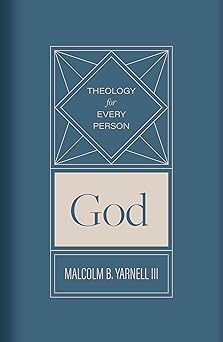
Far from being a dry arid landscape, theology should make us flourish as a fruit bearing (Ps. 92:14). Theology is fundamentally about knowing God and, to echo Augustine, loving God for his own sake and loving others for God’s sake. In this respect, everyone seeking to know God, in Christ, by the Spirit is a “theologian.” Comprising the first installment of three, the author states, “This series is intended for the typical disciple of Jesus Christ.” (11). Additionally, this work represents the author’s role in succeeding Leo Garrett at Southwestern Baptist Theological Seminary, aiming “to popularize his systematic theology” (250). While introductions to Christian doctrine abound, this one stands out not only for its readability, but for its biblical depth and catholic breadth. Any Christian can enjoy this well-thought out, biblically saturated, and historically informed introduction to systematic theology.
In thirteen chapters, this first volume of the set devotes seven chapters to theology proper, followed by six on divine revelation and the doctrine of Scripture. After establishing preliminary questions about the knowledge and existence of God, Yarnell first presents God’s infinitude (eternality and immensity, ch. 4) before emphasizing God’s Trinity (ch. 5). Yet a full exposition of the divine attributes awaits chapters six and seven. This unconventional, but useful approach presses divine incomprehensibility, via infinitude, to the front of the discussion in order to qualify what kind of God the Trinity is. However, divine Triunity being the most blessed thing God reveals to us about himself, the Trinity precedes a full presentation of the divine attributes. Chapters eight through thirteen skillfully depict the doctrine of divine revelation, ultimately driving home the Bible’s own view of itself. Keeping with the theme of this volume, and obviating some contemporary objections against classic Protestant views of biblical inerrancy, Yarnell solidly roots both divine revelation and Scripture in the Trinity (e.g., 185, 203). Without pitting God and Scripture against each other, God nonetheless precedes and takes priority over his self-revelation. In the end, the author offers readers a clear Trinitarian weighted doctrine of God and of divine revelation that retains God himself as the center of the show in every facet of Christian theology.
Several general and particular features stand out in this text. Generally, the author is simple without being simplistic, and roots his teaching firmly in Scripture, while bringing readers into conversation with samples from the entire scope of the Christian tradition. Most Protestant texts of this kind do not introduce readers to authors like Irenaeus, Cyril of Jerusalem, John of Damascus, Martin Luther, and even Dietrich Bonhoeffer and Karl Barth, while retaining readability. Students of any level will not only walk away with a clear grasp of some of the central features of what Scripture teaches, but they will learn how to read classic Christian theology from a Protestant sola Scriptura standpoint. At a historical juncture in which many Protestants are becoming disillusioned with their own tradition precisely at this point, this series of books illustrates well what a more classic Protestant method would look like. This reviewer cannot stress how timely and necessary the method of this book is today, re-introducing readers to Protestant theology in its classical method as well as content.
Particularly, Yarnell summarizes some complex ideas in concise, easy-to-reference ways, such as reducing arguments for God’s existence to seven things (33-44) and including seven biblical divine attributes under the category of love (117-122). Additionally, noting that the Oxford English Dictionary calls the Trinity “the central dogma of Christian theology” (71, 92), and rejecting modern trends like the eternal functional subordination of the Son to the Father (85-86), he summarizes Trinitarian theology well in ten points, assigning six to theology or God and four to economy or God’s works (86-92). Other examples along these lines abound, making this a readable and memorable introduction to God and his works.
The only obvious weakness in the volume is the author’s reluctance to maintain a classic Christian view of divine impassibility. He wrote, “I personally know major proponents on both sides of this debate and find their treatments of the matter derive from genuine Christian motives and methods. With Leo Garrett, I commend the doctrine of passibility a matter requiring further study” (122). Yet if over nineteen-hundred years of doctrinal reflection, with focused attention on this issue in relation to heresies such as patripassianism, and in positive treatments by authors like Athanasius and Cyril of Alexandria, are insufficient to solve this issue, then what help does “further study” afford to offer? “Christian motives and methods” behind recent rejections of impassibility are not the issue. The question is whether the historical Christian doctrine of God is adequate. Reflecting this broader Christian tradition, Thomas Joseph White powerfully reminds us of the cost of losing impassibility. Eternal life is union with God. If suffering belongs to God’s nature, then eternal life would also include the eternal suffering of the saints. Only an impassible God who took on a passible human nature can overcome suffering in the lives of his people. Readers should keep two things in mind, however: Yarnell does not deny impassibility, and the question he raises here marks only a single paragraph in this entire volume. Without sidelining the importance of the classic view of impassibility, this volume will remain one of the first I commend to introduce a broad Christian audience to God-centered Christian doctrine.
As one who teaches systematic theology, this reviewer both enjoyed and learned from Yarnell’s presentation of God and revelation. His engagement with Scripture makes his account compelling, and his interaction with the Christian tradition makes his account fresh, challenging, and enlightening. May the Spirit use this fine text to drive readers to think more clearly and to love God more dearly.
Ryan McGraw
Greenville Presbyterian Theological Seminary