A Book Review from Books At a Glance
by Thomas Haviland-Pabst
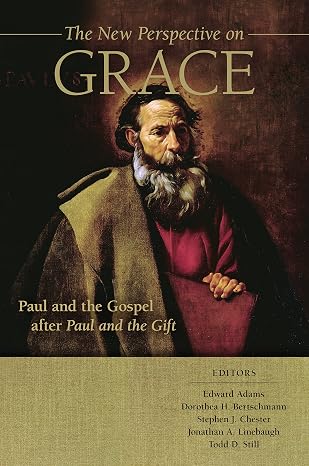
In the world of NT studies and with Pauline studies more specifically, it is rare for there to be a book that proves as groundbreaking as John M.G. Barclay’s 2016 work Paul and the Gift. In this monograph, Barclay, in conversation with second-temple Judaism and Reformation-era interpreters, to name a few, teases out what Paul meant by grace. With this edited volume, some seven years after Barclay’s Paul and the Gift, various scholars interact with and seek at times to add to and at times demur from Barclay’s proposal.
The book is divided into four parts. Part one (chapters 1-7) gives attention to the Pauline corpus. Part two (chapters 8-11) focuses on grace and gift (which are interrelated concepts in Barclay’s approach) in the NT canon more broadly. Part three, consisting of the twelfth through sixteenth chapters, explores the reception history of grace. The final part discusses various pastoral implications of Barclay’s understanding of Paul on grace.
A sampling of each of the parts will suffice to give a reader a sense of the contents of this book. Starting with essays on the Pauline corpus, Troels Engber-Pedersen, the well-known Danish NT scholar, takes issue with Barclay’s argument that “incongruity … constitutes the clue to a proper understanding of Galatians and Romans” (p. 7). ‘Incongruity,’ the reader might recall, is defined by Barclay as “the distribution of the gift without regard to the worth of the recipient” (Paul and the Gift [Grand Rapids: Eerdmans, 2016], Kindle Loc. 5113). Engber-Pedersen argues that Barclay has woefully neglected Paul’s pneumatic emphases in Romans and Galatians, which is a point well-taken, however, he goes on to add that Paul advocated for a version of “Pauline ‘perfectionism’” (p. 20).
Underlying this is the author’s belief that justification is a verdict rendered subsequent to the believers actually engagement “in agapic [loving] behavior” (p. 13), bringing in Rom 2:3-11 and Gal 5:4 (and context) for support. In case the reader questions whether this is what the author means, he writes, “the Christ-event was given once and for all for the sins previously committed—clearly, it was intended to lead into a state … in which sins were no longer committed. Only then would God also be able to give salvation” (p. 16, emphasis original). So far, despite his failure to fully emphasize the pneumatic dimension of salvation, as pointed out by Engber-Pedersen, Barclay’s focus on incongruity keeps him from the error of the former who reduces justification to sanctification and, as such, Barclay’s reading proves more faithful to Paul’s meaning than Engber-Pedersen’s reading does.
Michael Wolters, noted German NT scholar, seeks to complement Barclay’s theocentric focus regarding justification by discussing the “anthropological basic assumptions” (p. 52) of Paul’s teaching. With two convictions in mind, namely, that “[a]ll human beings are equal because God justifies everyone, without distinction, by faith … and all human beings are equal because they all, without exception, are sinners” (p. 53), the insights of such distinct and at times disparate readings of Paul as, say, Martin Luther and John Barclay, are bridged by these two anthropological assumptions. John Goodrich, in his essay, seeks to confirm Barclay’s findings by exploring whether his reading of Galatians and Romans can be applied to another Pauline letter, Ephesians. Here, Goodrich concludes that Ephesians fills out our understanding of God’s grace as seen in Romans and Galatians by bringing more to the foreground the “efficacy of grace,” writing, “in Ephesians” this “efficacy … is not only central but, in some instances, perfected” (p. 124).
Of the essays in part two which essentially land where Goodrich’s earlier mentioned essay do, namely, that other NT books (e.g., the gospel of John and 1 Peter) fill out and complement the understanding of grace discerned by Barclay in Galatians/Romans, the thought-provoking essay by Jane Heath stands out as she seeks to show how charis in the classical tradition gives insight into charis in the NT and, from this, brings to our attention “the significance of aesthetics … as an integral part of … the exegetical and theological interpretation of scripture” (p. 180). Concluding this essay, she writes, “The Christ-charis is given in order to create the conditions for recipients to enter into a congruous, fitting, worthy relation to the divine giver. That is the telos of the gift, and it is only as they enter into that promise that creation will properly return δόξα [glory] and charis [grace/gift] to God as God” (p. 193).
Regarding the five historical-theological essays, each are stellar in their own right, as thinkers such as Calvin, Luther, Karl Barth, and Cyril of Alexandria are discussed. Here, we see theologians of the past wrestling with and applying Paul’s teaching to their own lives and contexts. Similarly, the essays of the final part of this book are also of excellent quality as grace is related to such topics as sacrifice, friendship and preaching. This section serves to show that Paul’s teaching on grace, as understood by Barclay, possesses tremendous practical implications.
By way of evaluation, this is an excellent follow-up to one of the most widely acclaimed books on Paul’s theology in recent times. Like any collection of essays, there are mixed results. However, in the main, the essays in this volume are of a superb quality. As such, this is essential reading for anyone desiring a deeper exploration into the impact and implications of Barclay’s Paul and the Gift. In addition, this book, with its focus on God’s grace in the gospel, will at times move the reader to worship and praise God for the salvation wrought through his Son in the Holy Spirit.
Thomas Haviland-Pabst