A “Bonus” Brief Book Summary from Books At a Glance
Overview and Purpose
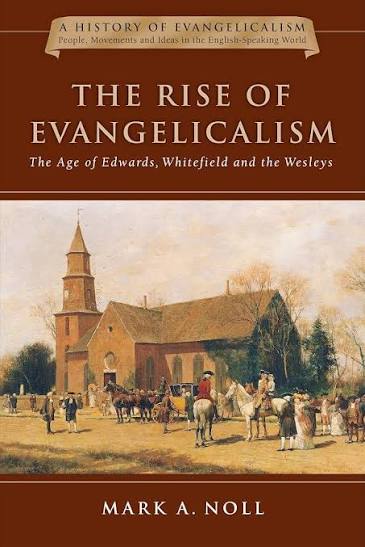
This is the first volume in the series, A History of Evangelicalism: People, Movements and Ideas in the English‑Speaking World, co‑edited by Mark Noll and David Bebbington. Noll’s aim is to trace the birth and spread of evangelicalism from roughly the 1730s to the 1790s across Britain, its American colonies, and beyond.
Defining Evangelicalism
Noll adopts—and cites—the classic “Bebbington Quadrilateral” to define evangelicals:
- Conversionism: the belief in personal spiritual transformation.
- Biblicism: high regard for the Bible as spiritual authority.
- Activism: emphasis on spreading the faith through lay engagement, evangelism, and missions.
- Crucicentrism: central focus on Christ’s atoning work on the cross.
He situates eighteenth-century evangelicalism within earlier movements—Reformation Protestantism, Puritanism, continental Pietism, and Anglican renewal—but emphasizes its distinct character through revival dynamics and cross‑Atlantic exchange.
Historical Context and Key Figures
Noll portrays the transatlantic nature of evangelical revivalism. Central figures include:
- Jonathan Edwards (America), who brought intellectual rigor and theological depth to evangelicalism.
- George Whitefield (England/America), who pioneered passionate, theatrical itinerant preaching and fostered non‑denominational revival networks.
- John and Charles Wesley (England), who organized Methodism through societies, small groups, dramatic lay involvement, and an enduring social ethos.
Noll also includes figures like John Newton, Selina, Countess of Huntingdon, Moravians (e.g., Zinzendorf), and Welsh revivalists like Howell Harris and Daniel Rowlands, tracing evangelicalism’s reach across Europe and the colonies
Revival Theology and Doctrinal Diversity
While evangelicals shared common emphases, they held significant doctrinal differences—especially on matters like divine sovereignty and human agency, leading to tensions between Calvinists (e.g., Whitefield) and Arminians (e.g., Wesley). What united them was a conviction that extraordinary works of the Spirit—revivals—were God’s chosen means to renew individual souls and revitalize the church, not merely the usual church routines.
They also emphasized personal religious experience—seeing conversion as more than mere doctrinal assent, but an emotionally vivid encounter: a “new birth,” often marked by intense inner conviction and assurance. . . .
[To continue reading this summary, please see below....]The remainder of this article is premium content. Become a member to continue reading.
Already have an account? Sign In