A Brief Book Summary from Books At a Glance
by Steve West
Table of Contents
Introduction – John MacArthur
1 An Historian Looks at Inerrancy – Harold Lindsell
2 Apeitheo: Current Resistance to Biblical Inerrancy – J. Barton Payne
3 The Attestation of Scripture – John Murray
4 Scripture – J.I. Packer
5 Scripture Speaks for Itself – John Frame
6 The Biblical Idea of Inspiration – B.B. Warfield
7 Some Reflections upon Inspiration – Edward J. Young
8 Verbal Inspiration in Church History – R. Laird Harris
9 The Witness of Scripture to Its Inspiration – Alan Stibbs
10 Notes on the Inerrancy of Scripture – Robert Preus
11 Inerrancy and Inspiration – Rene Pache
12 The Meaning of Inerrancy – Paul Feinberg
13 The Nature of Inerrancy – Roger Nicole
14 What Does Biblical Infallibilty Mean? – Gordon Lewis
Summary
Chapter 1: An Historian Looks at Inerrancy
Harold Lindsell
The issue of inerrancy is intrinsic to biblical authority. Compared to other doctrines, there is not much material in the NT that is specifically devoted to formulating a doctrine of revelation, inspiration, and inerrancy. There were no disputes between Jesus and his opponents on the doctrine of Scripture, nor between the apostles, early Christians, and religious Jews. The complete authority of Scripture was assumed and taken for granted. This largely remained the case all through church history until recently; even the Reformers and the Roman Catholics agreed on the authority and inerrancy of Scripture. Calvin, Luther, their disciples, and the Westminster Confession all affirm the Bible’s inerrancy and authority. Debates raged over the right way to interpret Scripture, but nobody denied its nature until the time of the skeptics and higher critics. While liberalism advanced in influence, conservatives mounted strenuous defenses of the church’s historic view of Scripture. In the early 20th Century fundamentalists defended the doctrine, and in mid-century new evangelicalism likewise maintained this high view of Scripture. The orthodox doctrine has never had more able defenses. Historically speaking, when people abandon the authority of Scripture they capitulate on many other vital biblical doctrines. If evangelicals today compromise on this issue, they will end up repudiating other key doctrines.
Chapter 2: Apeitheo: Current Resistance to Biblical Inerrancy
J. Barton Payne
There are currently theologians who classify themselves as evangelicals who are skeptical concerning the doctrine of biblical inerrancy. Some continue to use the term even though they are not convinced of the truth of the doctrine. Scripture is sometimes taken as a mix of the words of God and the words of fallible people. Partial inerrantists believe that Scripture can err in areas other than in faith and practice. Rather than accept what the Bible reveals about itself, people are saying they are apeitheo, “not persuaded.” Higher critics and antisupernaturalists reject inerrancy because they reject God’s work in giving his word; everyone who denies inerrancy puts their own judgment above the text. We are not able to contradict God or judge him by a criterion higher than himself. At issue is submission to the authority of God and the yielding of autonomous judgment; we are to obey his orders rather than follow our own. Subjectivism is also found in evangelicalism where people rely on secondary evidences to uphold the doctrine rather than relying on Scripture itself. Jesus’s attitude towards Scripture was one of complete confidence in its reliability and authority; nowhere do we see him doubting it. Repeatedly Jesus appealed to Scripture as authoritative, and he accepted its smallest details as valid. Unsurprisingly, this is the same practice found in the epistles. We must commit ourselves to the lordship of Jesus, and this means upholding the inerrancy of Scripture no matter the cost. . . .
[To continue reading this summary, please see below....]The remainder of this article is premium content. Become a member to continue reading.
Already have an account? Sign In
Buy the books
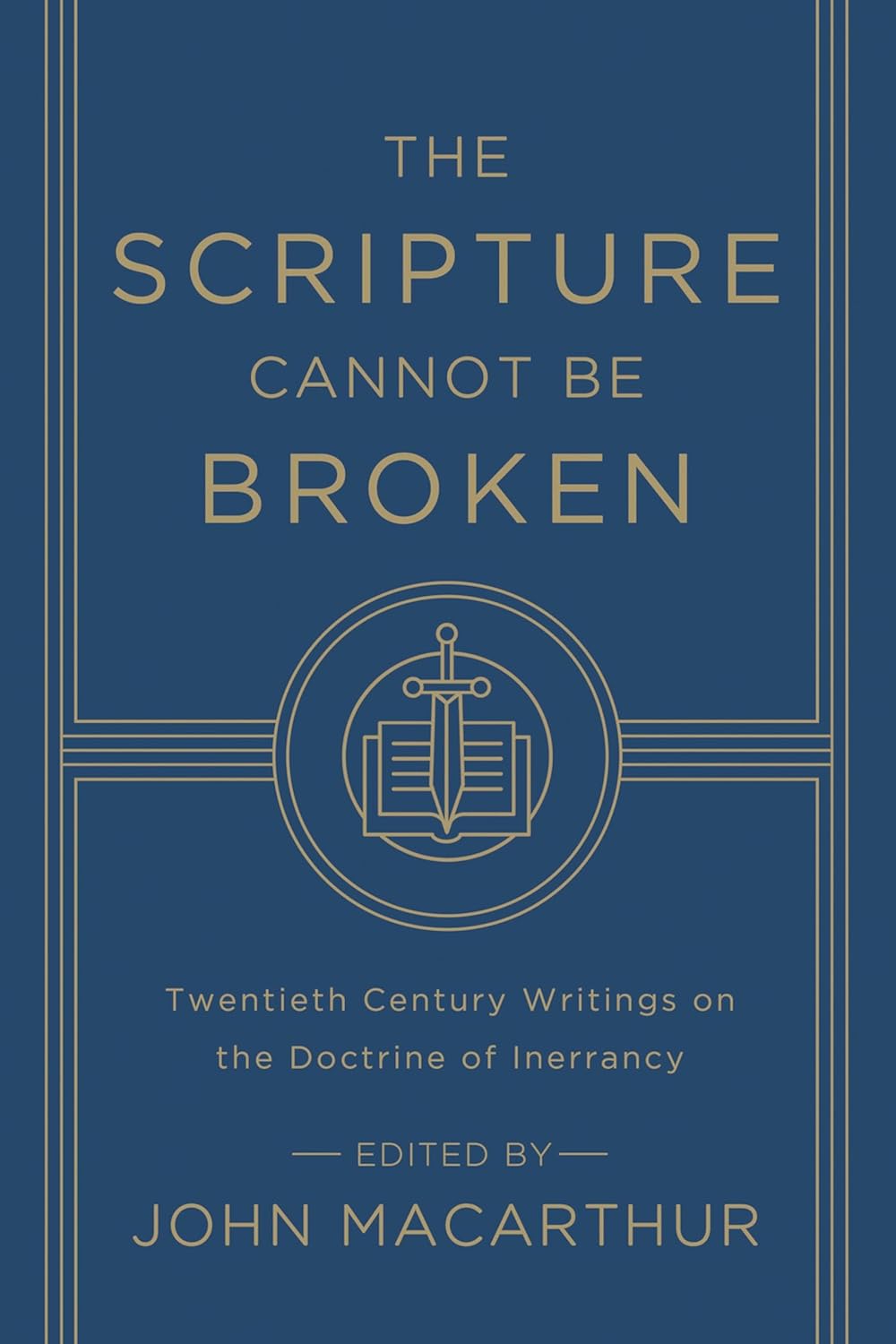
THE SCRIPTURE CANNOT BE BROKEN: TWENTIETH CENTURY WRITINGS ON THE DOCTRINE OF INERRANCY, edited by John MacArthur