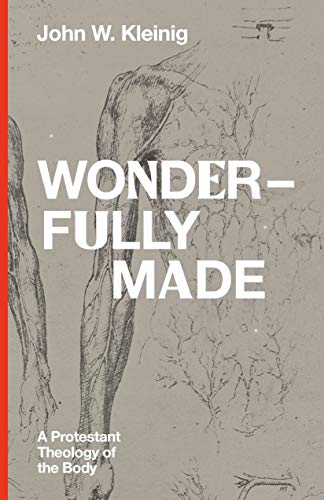
A Brief Book Summary from Books At a Glance
by Flynn Evans
About the Author
John W. Kleinig (PhD, University of Cambridge) is a retired lecturer at Australian Lutheran College, having served there from 1982 to 2009, and is also an ordained pastor in the Lutheran Church of Australia. He has written numerous books, including Grace upon Grace: Spirituality for Today and commentaries on Hebrews and Leviticus. He is married to Claire, and they have four children and eight grandchildren.
Table of Contents
- Body Matters
- The Created Body
- The Redeemed Body
- The Spiritual Body
- The Sexual Body
- The Spousal Body
- The Living Body
Summary
Chapter 1: Body Matters
Topics such as bodily autonomy have made the body an essential part of understanding our moral agency today. However, a fundamental assertion of Christianity is that one’s body is created by God and under his Lordship. Scripture teaches that the Holy Spirit’s inhabiting of human beings makes personal holiness a matter of the body as much as a matter of the spirit since humans are embodied persons consisting of both. While modern society claims to care much about the body with its promotion of sexuality and independence, it has increasingly neglected its sacred status. The paradoxical effect of this overemphasis upon the body is creating an etherealized, quasi-Gnostic form of spirituality.
Rather than a strictly dualistic view of the person, Scripture presents humans as body-soul composites, in which they exist as souls as much as they do as bodies. We experience both immaterial and material aspects of ourselves simultaneously and harmoniously. Although we can appreciate the complexity of our bodies in part, only God understands it fully. Part of the process of sanctification then is God helping us realize the full gloriousness of our bodies in view of Christ’s sacrifice on the cross as the God-man due to the total extent of the flesh’s corruption under sin.
God’s care for the body in providing salvation to humanity comes from his desire to see human beings enter into eternal communion with him. The revelation of God in the Incarnation is the ultimate exaltation of the body as that which He intends to engage with intimately for the sake of his image-bearers. By pursuing a godly life, we can manifest God’s grace, mercy, and justice physically throughout our time on this earth. The church needs to be defined by a positive vision for the body’s purpose more than by a negative one. Rather than engaging in purely philosophical speculation, appreciating the body as God intended can only come through deep engagement with his Word. Any consideration of the body must be guided by the sense that every single body redeemed by Christ through faith, no matter how it might be in the present, is destined for everlasting splendor before the face of God.
Chapter 2: The Created Body
Each and every human body is specially designed by God. As those set apart from the rest of creation, human beings are called to create in a way that animals are not and be reflections of God in all that they say and do. They are also gendered, with men and women both working together to fully image God and reflect the love of Christ for the church in marriage. Someone taking the life of another human being is as if they were doing the same to God himself. Human beings are spiritually animated by God himself. God intentionally places mankind within creation, not simply above it.
As part of God’s encouraging humanity to depend upon him, He has designed the marital relationship as essentially one of interdependence. The detail that Eve is taken from Adam’s side signifies that she is not meant to be above or below him but rather walking side-by-side with him. The marital bond shared by Adam and Eve in Eden was perfect, so they were able to completely see and be seen by each other in their nakedness without any fear. Sadly, the fall robbed sexuality of its originally intended purity. As long as the guilt of original sin remains, mankind will never be completely free from shame. The devil sought to deceive Adam and Eve because he wanted to experience embodiment like they did, striking at the heart of human fulfillment by rupturing the bond human beings initially shared with God and each other. Due to the fall, men and women can no longer perfectly abide in their one-flesh union, opening them up to selfishness and resentment towards each other.
God’s preserving common grace allows for humanity to enjoy good things in his creation despite the fall. The blessing of marriage, although certainly distorted by the presence of sin, continues to be offered to men and women for their good and God’s glory. However, humanity must abide by the natural law, God’s general revelation of Himself and ordering of human behavior inscribed within the hearts of mankind. Failure to obey God’s basic wisdom will surely result in decay and chaos for human civilizations. The health of the body must be sufficiently cared for, treated as divinely designed rather than a throwaway spiritual vessel. God chose to use human beings in their bodies as his co-laborers in tending to creation, both in respecting the environment and glorifying him in pursuing their various vocations. Having children continues to respect God’s intentions for marriage and the world, filling it with his image-bearers and expanding his dominion as mediated through them. Being able to glorify God in the body is cause for praise and adoration, since it would be impossible apart from God and should be carried out throughout the entirety of the body’s range of activities. . . .
[To continue reading this summary, please see below....]The remainder of this article is premium content. Become a member to continue reading.
Already have an account? Sign In