A Brief Book Notice from Books At a Glance
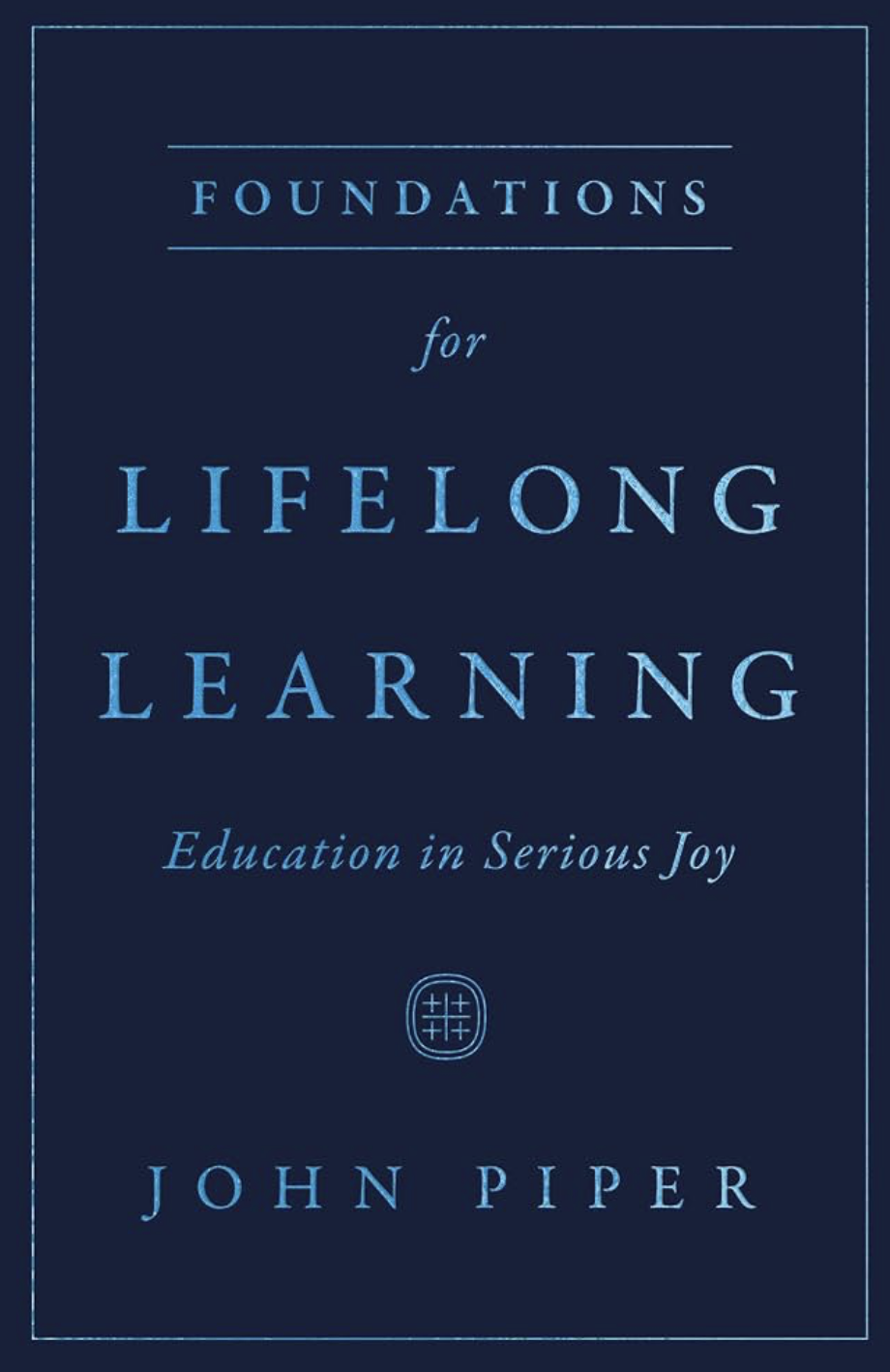
In Foundations for Lifelong Learning, John Piper casts Christian education as the process of growing in our ability to navigate God’s word and world, appealing to students and Christian educators alike.
Table of Contents
Introduction: Education in Serious Joy
1 Observation
2 Understanding
3 Evaluation
4 Feeling
5 Application
6 Expression
Conclusion: Foundations for Lifelong Learning
Appendix: Agassiz and the Fish
Selected Quotes
- “A well-educated person sees the glory of God in the word that God inspired and in the world that God made. An educated person understands God’s glory and evaluates it and feels it and applies it and expresses it for others to see and enjoy. That outward bent is called love. Therefore, the aim of lifelong learning is to grow in our ability to glorify God and love people.” (17-18)
- “The very existence of the Bible is a trumpet blast about the importance of learning to read.” (37)
- “But the aim of lifelong learning is to grow in our ability to understand what we observe, and to understand as much as we can for the sake of living a life of joy that glorifies God and serves others.” (47)
- “It is possible to evaluate things as true because God is true, and He has revealed himself in Christ and in his words which are true.” (76)
- “Understanding lifelong education as the formation of the heart with its feelings makes clear that the task of education is not merely human but involves the work of God’s Spirit.” (91)
- “As I have tried to show, this thrust of Scripture from knowing to doing is rooted in the nature of Christian love as the overflow of joy in God.” (120)
- “Lifelong learning is meant to lead to active application of what we know for the good of others and the glory of God. Observing and understanding and evaluating are for the sake of joy in God that overflows in a thousand applications of doing good.” (136)
- “It is crucial that we discern not only what to say, but when to say it. When our spiritual sensors are working, we discern the need of the moment.” (156)