A Brief Book Summary from Books At a Glance
by Steve West
Table of Contents
1 The God of Mercy or the God of Wrath?
2 The God of Peace or the God of Ethnic Cleansing?
3 The God of Truth or the God of Deception?
4 The God of Evolution or the God of Creation?
5 The God of Grace or the God of the Law?
6 The God of Monogamy or the God of Polygamy?
7 The God Who Rules Satan or the God Who Battles Satan?
8 The God Who is Omniscient or the God Who Doesn’t Know the Future?
9 The God Who Elevates Women or the God Who Devalues Women?
10 The God of Freedom with Food or the God of Forbidden Food?
Summary
Introduction
In the second century AD, Marcion explicitly rejected the Old Testament, and although the church repudiated his teaching, for many Christians there is a lingering uneasiness with the content of the Old Testament in comparison with the New. Many liberal critical scholars diminish the Old Testament’s theology, ethics, and history. It is imperative that this next generation of Christians be taught the value and truth of the Old Testament as the Word of God. Rather than ignoring it, the church should provide answers to the challenges and tough questions that people wrestle with in regard to the OT. Jesus is central in the message of the Bible, but we must never set Christ in opposition to the rest of revelation. We must take up the questions and accurately depict the true God and all that he has done. Since the OT represents about 75% of God’s revelation in Scripture, to ignore it is to ignore the majority of what God has revealed.
Chapter 1: The God of Mercy or the God of Wrath?
Many contemporary atheists present the God revealed in the OT as a cruel, vindictive, evil ogre. They bitterly attack him, and they detest any passages that talk about his wrath, righteous judgment, and his punishment of wickedness. In Exodus 34:6-7, God revealed that he is a compassionate and gracious God, slow to anger, abounding in love and faithfulness. God uses a special word (hesed) that is too rich to translate with only one English word. It refers to God’s loving-kindness, covenantal love, mercy: but perhaps it is best rendered as grace. God does get angry with sin, and evil must not be left unchecked and undealt with. God is always self-controlled, and his love for Israel remained despite their rebellion and disobedience. To truly love what is good requires hating what is evil, since evil is the opposite of good, and will destroy it if unchecked. Hating evil, and being angry at injustice, arises from loving what is good. When the OT speaks of God hating, it is referring to his strong rejection of what is evil and harmful.
God’s anger and wrath are never irrational or blind, but function in accord with his righteous antipathy to evil. Because God cares for human beings, he is angry when confronted by the evil that destroys them. God is patient and long-suffering, giving people time to repent from their evil ways and turn to him. God’s love and grace endure forever, but his anger lasts for a moment. He cares far too much to be indifferent and apathetic to sin, injustice, and pain. “God’s anger is preceded, as well as it is followed, by his love, grace, and mercy. It is for these reasons that we refuse to make a difference between the way God is represented in the Old Testament and the way he is represented in the New Testament.”
Chapter 2: The God of Peace or the God of Ethnic Cleansing?
Postmodern readers of Scripture often declare that they cannot worship a God who would command genocide and advocate violence. God is a God of love and mercy, and his mercy and wrath are not contradictory. Early in Scripture God is revealed as a divine warrior (Ex. 15). God did command some wars, but not every war in Scripture was waged with his approval. The Canaanites were placed under the ban, but only after centuries of God giving them time to turn from their evil ways. Their wicked practices included sexual abominations and child sacrifice: they were not innocent people. Yahweh is the only God and Judge of the world, so when he brings a nation to judgment he is operating within his righteous authority. Canaanite culture was irredeemable evil and had to be wiped clean. Israel was used by God as an instrument of judgment, and the Canaanite ban was a unique judgment that was not extended to other nations. Rahab was a Canaanite, and she was spared and is considered a paradigm of faith in Scripture. Israel was commanded to care for the poor and foreigners in their midst, so the ban was not motivated by racism or xenophobia.
It is also important to understand the culture, where hyperbole in “war talk” was the norm. In other words, the total annihilation reported represented a stock phrase even when the enemy still survived in numbers. Apart from these judicial wars commanded by God against the Canaanites, God also gave instructions to his people about how they were to wage war, and the rules laid down are extremely humane. Israel was not to start wars anytime they wanted. God punished and fought against the Canaanites because of their sin, and also to keep his people from adopting their wicked practices (which would have resulted in their destruction). The vengeance of God is not about a feud or payback but is rather concerned with zeal for the holiness and purity of his name. It is not possible to place the Old and New Testaments in opposition at this point, since the Book of Revelation contains scenes of fearsome judgment, violence, and warfare. We must sharply distinguish the OT’s Yahweh wars from what is called “holy war” today. Nobody today is commanded to do what Israel was called to do with the Canaanites. Today, we are to wait for God’s eschatological work where he destroys evil forever. . . .
[To continue reading this summary, please see below....]The remainder of this article is premium content. Become a member to continue reading.
Already have an account? Sign In
Buy the books
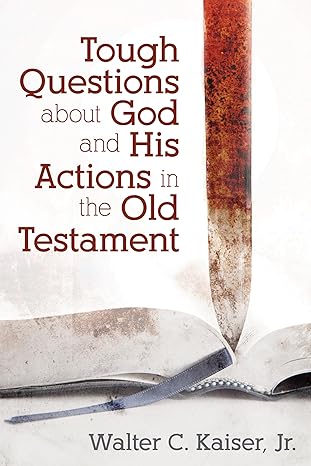
TOUGH QUESTIONS ABOUT GOD AND HIS ACTIONS IN THE OLD TESTAMENT, Walter C. Kaiser, Jr.