A Brief Book Notice from Books At a Glance
Table of Contents
1 Apologizing for God: Apologetic Preaching to a Postmodern World
2 Proclaiming Mystery in an Age of Information
3 Proclaiming Hope in an Era of Skepticism
4 Proclaiming Confidence in a Time of Doubt
5 Proclaiming Truth in a Climate of Relativism
6 Proclaiming Jesus to a Postmodern World
7 How to Apologize Without Saying You’re Sorry
Selected Quotes
- “We live and preach between the times. The dogmatism of the modern era’s pulpit has given way to ambivalence in pulpits of the postmodern era.” (11)
- “The love/hate relationship with technology, skepticism about objectivity, preoccupation with choices, concern for unified communities and hermeneutic of suspicion are a few of the more salient aspects of postmodernism. The list is hardly exhaustive.” (19-20)
- “Christian apologetics should have two immediate goals: (1) to present unbelievers with a viable understanding of Christian faith so they may want to make it theirs, and (2) to instruct, confirm and affirm those who are already believers in the faith.” (25)
- “Hope empowered the early church at Pentecost. Hope still empowers the church today.” (57)
- “The postmodern world exists on multiple understandings of reality, highly skeptical of any objective view of truth. In fact, the notion of absolute truth is seen as an oxymoron in the pluralized epoch of postmodernism. Postmoderns harbor no concept of absolute, universal, objective truth. Matters of truth are relative.” (84)
- “The point I am making remains: effective proclamation of Jesus Christ in a postmodern epoch must emerge from a correct theological understanding of its source materials, namely the New Testament.” (103)
- “There is no more hope-filled faith in the world than Christianity; let’s use that point to our advantage in talking with others about what we believe.” (119)
Buy the books
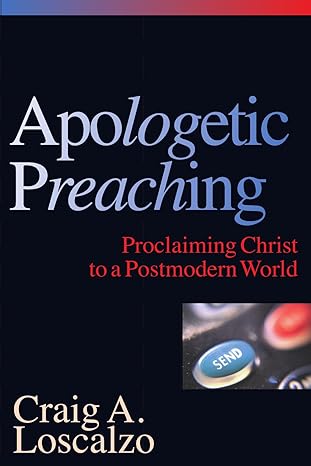
APOLOGETIC PREACHING: PROCLAIMING CHRIST TO A POSTMODERN WORLD, by Craig A. Loscalzo