A Book Review from Books At a Glance
by Osbert B. Wei
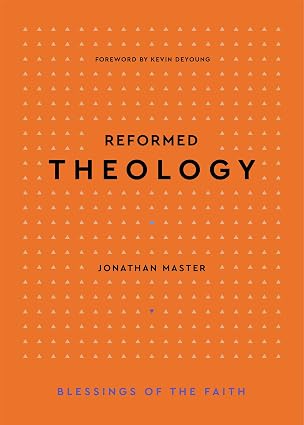
One of the biggest frustrations in communication is when you are misunderstood. Maybe you have been misunderstood by a friend, a spouse, your boss, a church member, your pastor, or by Christians of another denomination. Jonathan Master’s Reformed Theology is a concise attempt to clarify what it means to be a Reformed Christian. Clear communication begins with defining terms, which is why I find this book to be appealing by its title alone. Clarifying what Reformed theology helps Christians understand that (1) their beliefs about God matter and that (2) Reformed theology is a blessing for the church. To introduce his book, Master provides a three-fold definition of Reformed theology, which is also the structure of his book:
- Reformed theology holds to the five solas that stemmed from the Protestant Reformation (sola Scriptura, sola fide, sola gratia, sola Christus, and sola deo gloria).
- Reformed theology upholds the centrality of the role of covenants in Scripture, since it is a whole-Bible theology and covenants are how God related to his people.
- Reformed theology values the historic and public confessions of faith, which are attempts by Christians throughout history to clearly express what they believe about God as taught by Scripture.
Master begins by emphasizing the centrality of Scripture in the Christian life and argues that election, that God chooses who he saves (p. 44), is a biblical doctrine. Even in Genesis, the Word of God plays a commanding role in creation. Even Jesus referred to Scripture many times throughout his ministry, meaning those who follow him must also uphold the centrality of Scripture. In Scripture, one encounters God’s sovereignty over man’s salvation. If God is not sovereign over man’s salvation, man has no hope for salvation (Jn 6:60-65; 15:5). Election is central to Reformed theology, but Reformed theology should not be minimized to be only about election. Nonetheless, election should lead to fervent evangelism efforts, contrary to misunderstandings about God’s sovereignty diminishing evangelism efforts (pp. 46-47).
Since Reformed theology upholds the centrality of Scripture, it becomes clear that God reveals himself and the relationship he has with his people through covenants. Master summarizes the biblical covenants from the Adamic, to the Noahic, to the Mosaic, to the Davidic, and to the New Covenant, all of which culminate in the saving work of Jesus Christ for all nations. Master sums up the importance of covenants in Reformed theology, “Because Reformed theology is centered on the Scriptures, the way in which the Bible reveals God’s salvation must inform how we understand and proclaim it today” (p. 61).
Master claims that Reformed theology can not only be defined, but it should also be celebrated. God’s sovereignty comforts believers, election reveals God’s love for sinners and salvation security for believers, the covenants provide a framework for the Christian life, and clear confessions serve as guardrails for what a church believes. Reformed theology centers its worship of the Triune God on the Word of God. Since God has revealed his Word, his church must respond to him by the Word. Reformed theology is a blessing to the church because it upholds the authority of God’s Word for all areas of the Christian life.
Though a short book, Reformed Theology provides an accessible introduction to those interested in, or have questions about, Reformed theology. Personally, I picked up this book because I needed more clarity on what someone meant when they said they were “Reformed.” Even Master admits the occasional muddiness of defining Reformed theology from person to person, “Reformed theology has been defined in different ways by different teachers” (p. 95). In any conversation, whether casual or academic, defining terms is important. While it appears Master could have expanded on his book, and his “middle-of-the-road definition” of Reformed theology (p. 95), he has emphasized the (1) authority of Scripture and God’s sovereignty, (2) the biblical covenants, and (3) the blessings that stem from holding to Scripture, God’s sovereignty, and the biblical covenants, most obviously expressed in public confessions of faith.
The end of Master’s book contains a handful of anticipated questions about Reformed theology and Master’s answers, along with a list of recommended resources for further reading. Reading Reformed Theology is a great entryway for mining the depths of the Reformed tradition. I am grateful to have read Master’s book and am better informed about the essence of Reformed theology.
Osbert B. Wei